Introduction
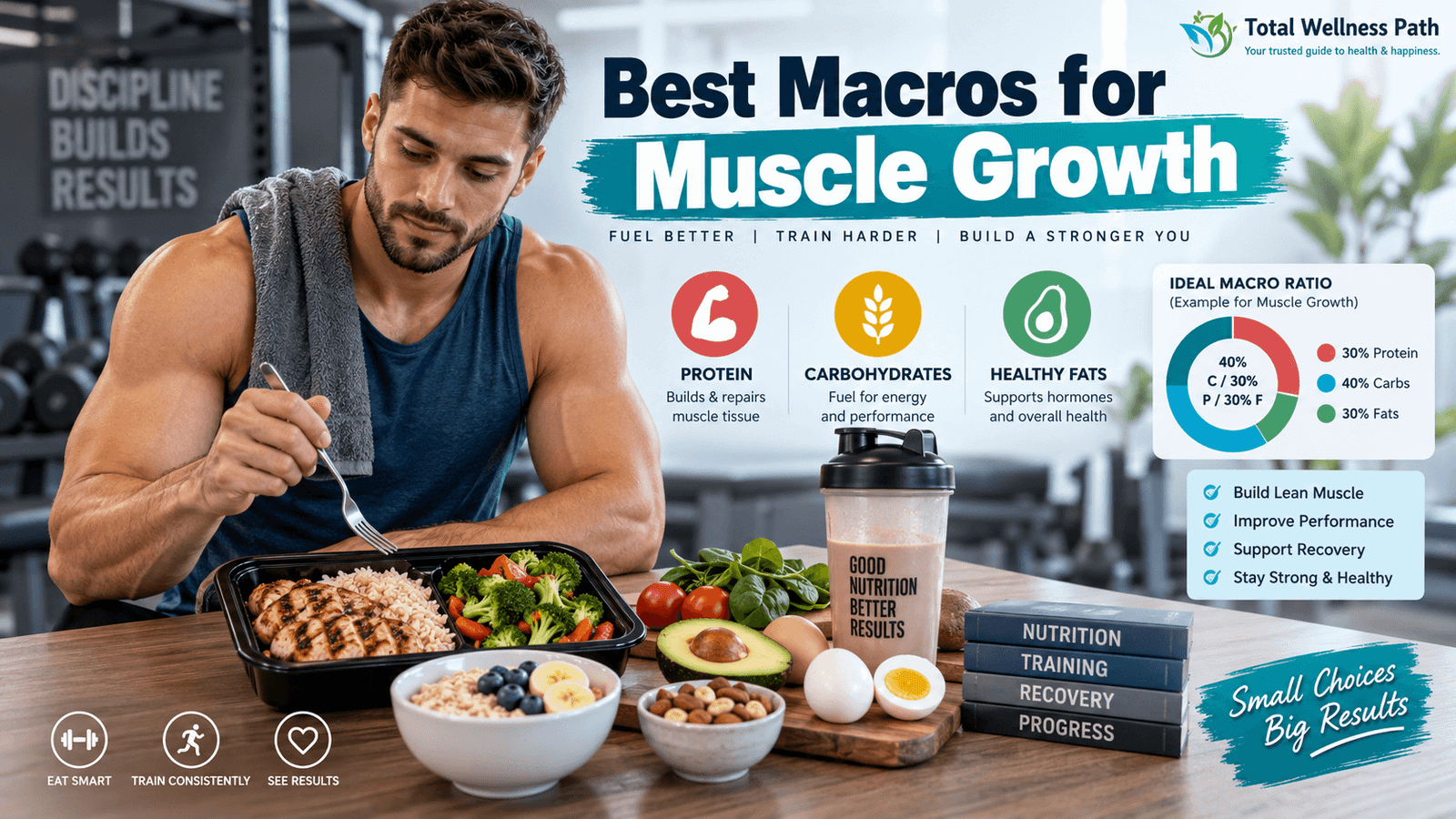
When I first started training seriously, I made the same mistake most beginners make: I focused obsessively on my workouts while treating nutrition like an afterthought. I’d hit the gym five days a week, crush heavy compound lifts, and still plateau after a few months. The turning point came when I finally understood that the Best Macros for Muscle Growth aren’t just numbers on a label they’re the foundation of every single physiological adaptation your body needs to actually grow.
I’ve spent years experimenting with different macro ratios, studied the research, and worked with people from complete beginners to advanced lifters. What I’ve learned is that understanding best macros for building muscle is what separates people who “go to the gym” from people who see real, measurable progress.
In this guide, I’m sharing exactly what I’ve discovered about the best macros for building muscle, including the precise ratios that work, how to customize them for your goals, and how to implement them without overthinking. If you’re ready to move past guesswork and start building muscle based on solid nutrition science, this is for you.
Why Macros Matter More Than You Think
I remember watching a training buddy who had perfect form and incredible consistency in the gym, but he never seemed to add significant muscle mass. One day, we logged his nutrition, and I saw the problem immediately: he was eating barely 100 grams of protein daily. His body literally didn’t have the building blocks to create new muscle tissue, no matter how hard he trained.
This is where understanding the best macros for building muscle becomes critical. Your muscles are made of protein, and they require specific amounts of carbohydrates and fats to function optimally. The best macros for building muscle aren’t one-size-fits-all, but the science is clear about the ranges that work.
Here’s what happens when you get your macros right:
- Muscle protein synthesis increases — your body builds more tissue
- Recovery accelerates — you reduce soreness and bounce back faster
- Hormonal balance improves — testosterone and growth hormone remain optimized
- Energy for training increases — you perform better in the gym
- Body composition improves — you build muscle while minimizing fat gain
When you ignore best macros for building muscle, you’re essentially trying to build a house without a blueprint. You might put in work, but the results won’t reflect your effort.
The Science Behind Best Macros for Building Muscle
Protein: The Non-Negotiable
Let me be direct: the best macros for building muscle start with protein, and there’s zero debate about this in the research.
Your muscles are composed of amino acids. When you train hard, you create micro-tears in muscle fibers, and protein is what your body uses to repair and rebuild them stronger. This process is called muscle protein synthesis, and it’s the literal mechanism of muscle growth.
For optimal muscle building, most research suggests:
- 0.7 to 1 gram of protein per pound of body weight daily
I know that sounds high if you’re used to the old “0.8g per kg” rule, but that recommendation was for maintenance, not growth. If you’re trying to build muscle with the best macros, you need to be aggressive with protein.
Why? Because not all dietary protein becomes muscle. Your body needs surplus amino acids to create a positive nitrogen balance—the biochemical environment where muscle growth actually happens.
Personal example: At 185 pounds, I consume 160–185 grams of protein daily. This typically puts me in that 0.85–1.0 range. I’ve noticed concrete differences in recovery and muscle definition when I dip below 150g.
Carbohydrates: Your Training Fuel
This is where many people mess up. They cut carbs aggressively and wonder why their lifts feel weak and their muscle growth stalls. Understanding the best macros for building muscle means recognizing that carbs aren’t the enemy they’re your performance enhancer.
When you lift weights, your muscles burn glycogen (stored carbohydrate energy). Without adequate carbs, you can’t generate the intensity needed to stimulate muscle growth. You’ll feel flat, fatigued, and you won’t be able to progressively overload your lifts.
The optimal range for best macros for building muscle:
- 2 to 3 grams of carbohydrates per pound of body weight
At 185 pounds, that’s 370–555 grams of carbs daily. Yes, that’s a lot. But when you’re training hard and trying to build muscle, carbs are your training partner.
The timing matters too. I consume most of my carbs around my workout before, during, and after my training sessions. This keeps my glycogen topped up for performance and kickstarts recovery immediately post-workout.
Fats: The Hormonal Foundation
If protein builds muscle and carbs fuel your training, fats keep your entire system running. Dietary fat is essential for hormone production, and hormones are what make muscle growth possible.
Low-fat diets are muscle-killing disasters. I’ve seen people restrict fat intake, watch their testosterone drop, and wonder why they suddenly can’t gain muscle anymore. It’s because testosterone and its cousin DHT, along with growth hormone depend on adequate dietary fat.
For best macros for building muscle, aim for:
- 0.3 to 0.4 grams of fat per pound of body weight
At my weight, that’s roughly 55–74 grams of fat daily. This ensures I have enough fat to maintain hormonal health without overdoing calories (since fat is 9 calories per gram).
The type of fat matters too. I prioritize unsaturated fats (nuts, olive oil, fatty fish) and get around 20–30% of my total calories from fat sources.
Sample Macro Targets for Muscle Building
For a 185-Pound Person Aiming to Build Muscle:
| Macro | Daily Target | Calories |
|---|---|---|
| Protein | 165–185g | 660–740 |
| Carbs | 370–555g | 1,480–2,220 |
| Fat | 55–75g | 495–675 |
| Total | — | ~2,800 calories |
This assumes moderate training intensity (4–5 days per week) and a slight caloric surplus for muscle gain.
The best macros for building muscle in this example create an environment where your body has abundant amino acids, energy for intense training, and hormonal stability. These are the fundamentals.
How to Calculate Your Personal Best Macros for Building Muscle
Not everyone weighs 185 pounds, and not everyone trains at the same intensity. Here’s how I calculate custom macro targets:
Step 1: Determine Your Caloric Surplus
First, calculate your maintenance calories (roughly 14–16 × body weight in pounds). Then add 300–500 calories. This modest surplus promotes muscle growth without excessive fat gain.
Example: A 170-pound person at maintenance (~2,550 calories) should aim for 2,850–3,050 daily.
Step 2: Set Your Protein Baseline
Multiply your body weight by 0.8–1.0. This is non-negotiable when pursuing best macros for building muscle.
Example: 170 pounds × 0.9 = 153 grams of protein daily
Step 3: Allocate Carbs Based on Training
Start at 2g per pound, and adjust based on energy levels and performance:
- Feeling flat in the gym? Add more carbs.
- Gaining too much fat? Reduce by 50–100g.
Example: 170 pounds × 2.5 = 425 grams of carbs
Step 4: Fill the Rest with Fat
Whatever calories remain after protein and carbs should come from fat.
Example:
- Protein: 153g × 4 cal = 612 calories
- Carbs: 425g × 4 cal = 1,700 calories
- Remaining: 2,950 – 2,312 = 638 calories ÷ 9 = 71g fat
This is how the best macros for building muscle becomes personalized to your needs.
Common Mistakes People Make With Macros
I’ve made these mistakes myself, and I’ve watched hundreds of people repeat them:
1. Prioritizing Protein at the Expense of Carbs
People often obsess over hitting 200+ grams of protein while eating only 150 grams of carbs. This is backwards. You can’t train hard without fuel. The research is clear: best macros for building muscle includes adequate carbohydrates.
2. Staying in Too Large a Caloric Surplus
A 500-calorie surplus will build muscle, but it’ll also add a lot of body fat. When calculating the best macros for building muscle for your situation, keep the surplus modest (300–400 calories max).
3. Not Adjusting for Individual Factors
Your metabolism isn’t exactly like mine. If you’re naturally lean with a fast metabolism, you might need 3,000+ calories even at 170 pounds. If you’re naturally heavier, you might only need 2,600. The “rules” are starting points, not gospel.
4. Ignoring Consistency
This is the biggest mistake. People nail the best macros for building muscle for two weeks, then abandon it. Muscle growth takes months. Nutrition consistency is everything.
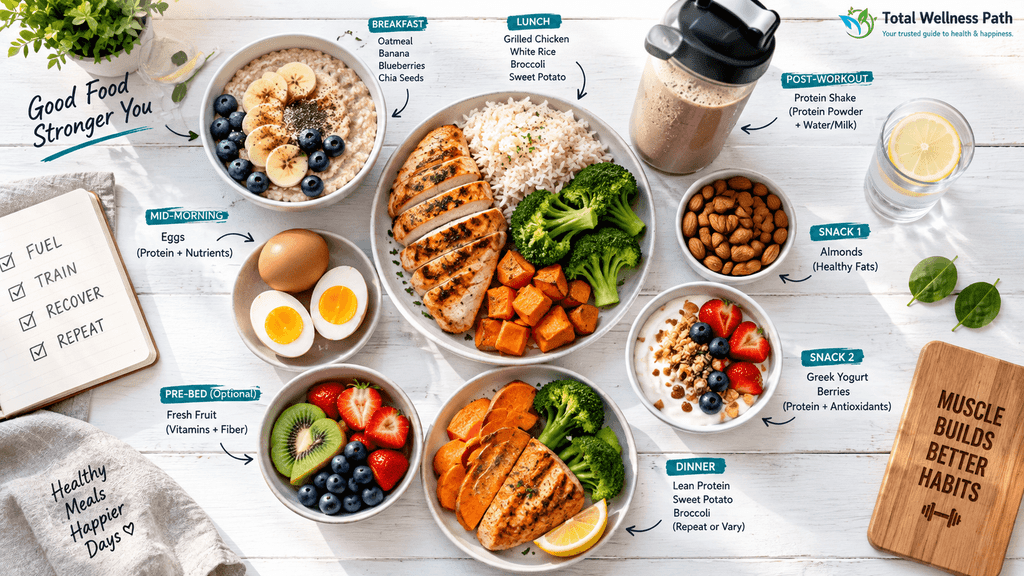
Practical Implementation: How I Structure My Days
Understanding the best macros for building muscle is one thing. Actually eating them consistently is another. Here’s how I make it work:
Breakfast (High Protein, Moderate Carbs)
- 3 whole eggs + 2 egg whites
- 1 cup oatmeal
- 1 banana
- 1 tbsp almond butter
Macros: 50g protein | 80g carbs | 15g fat
Mid-Morning Snack (Protein + Carbs)
- Protein shake (30g whey protein)
- 1 large apple
- 20g almonds
Macros: 35g protein | 40g carbs | 8g fat
Pre-Workout (Simple Carbs)
- Rice cakes with honey
- Black coffee
Macros: 2g protein | 60g carbs | 1g fat
Post-Workout (High Protein + High Carbs)
- 1.5 scoops whey protein
- 1 cup white rice
- 1 tbsp coconut oil
Macros: 45g protein | 85g carbs | 10g fat
Dinner (High Protein, Vegetables, Carbs)
- 8 oz chicken breast
- 2 cups broccoli
- 1.5 cups sweet potato
- 1 tbsp olive oil
Macros: 55g protein | 60g carbs | 8g fat
Evening Snack (Casein Protein + Fat)
- Cottage cheese (1 cup)
- 1 oz almonds
Macros: 28g protein | 10g carbs | 12g fat
Daily Total: ~215g protein | ~335g carbs | ~54g fat = ~2,950 calories
This is how best macros for building muscle translates into real food. It’s not glamorous, but it works.
Best Macros for Building Muscle: Product Recommendations
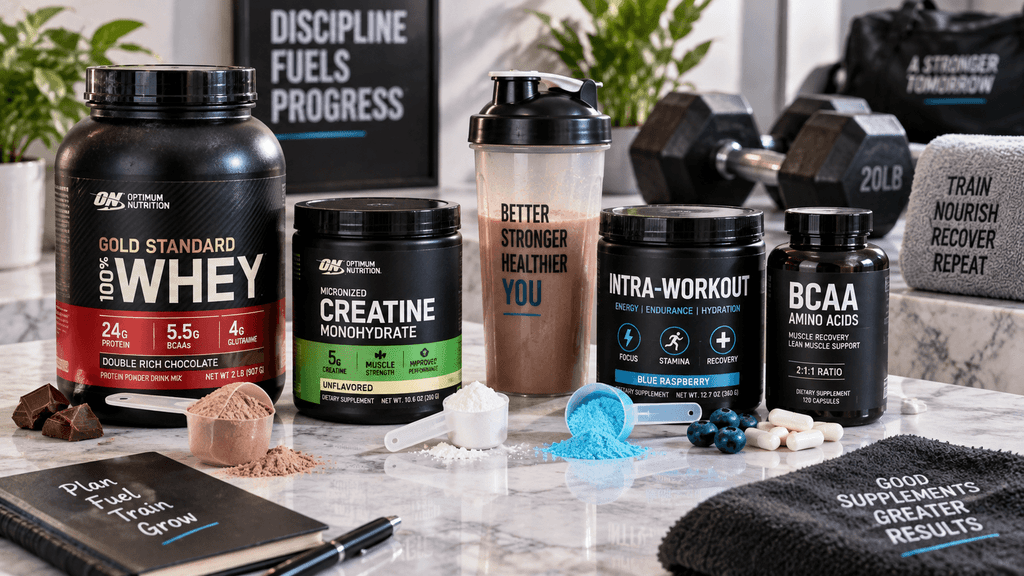
When it comes to supplementing your nutrition strategy for best macros for building muscle, there are a few products that legitimately make a difference. I’ve tested extensively, and these are the ones I actually use:
Whey Protein Powder
I include protein powder in my calculation of the best macros for building muscle because it makes hitting protein targets feasible. Consuming 180g of protein from whole food alone is bulky and expensive.
Why I recommend it: Whey is absorbed quickly, contains all essential amino acids, and is cost-effective per gram of protein. I use it post-workout and as a convenient meal component.
Carb-Based Intra-Workout
When pursuing the best macros for building muscle, having carbs available during intense training sessions matters. Intra-workout carbs maintain glycogen and performance during long sessions.
Why I recommend it: It’s the difference between finishing strong on your 5th set versus feeling flat. The mental clarity boost alone is worth it.
Creatine Monohydrate
Creatine is one of the few supplements with legitimate research backing. When you’re trying to optimize the best macros for building muscle, creatine amplifies your gains by 10–15% over time.
Why I recommend it: It’s cheap, well-studied, and it works. Period. 5g daily, every day, no cycling needed.
Pros & Cons of Macro-Based Nutrition for Muscle Building
Pros:
✓ Evidence-based: The best macros for building muscle are based on decades of sports nutrition research, not trends
✓ Measurable: You can track progress and adjust based on real results
✓ Sustainable: Unlike restrictive diets, best macros for building muscle approach allows flexibility within the framework
✓ Hormonal optimization: Proper macros maintain testosterone and other anabolic hormones
✓ Progressive overload support: Adequate carbs and calories allow you to lift heavier and recover faster
Cons:
✗ Initial planning time: Learning the best macros for building muscle for your situation requires calculation
✗ Food prep required: You can’t eat randomly and hit targets—preparation is essential
✗ Plateau management: After 8–12 weeks, you might need to recalculate best macros for building muscle as your body adapts
✗ Social friction: Saying no to pizza and beers because of macro targets isn’t always easy
✗ Individual variation: What works as best macros for building muscle for one person might need tweaking for another
Frequently Asked Questions About Best Macros for Building Muscle
1. What are the best macros for building muscle if I’m a beginner?
As a beginner, start conservatively:
- Protein: 0.7–0.8g per pound
- Carbs: 2–2.5g per pound
- Fat: 0.3g per pound
Beginners often build muscle with less food than advanced lifters because training is such a novel stimulus. Don’t overeat. The best macros for building muscle as a beginner are ones you can sustain consistently.
2. Can I build muscle on lower macros if I’m in a calorie deficit?
Technically possible, but inefficient. Recomposition (building muscle while losing fat) happens slowly and requires very high protein. A 200-calorie deficit with 1.0g protein per pound might work if you’re completely new to training, but best macros for building muscle generally assumes a small surplus.
3. Does timing of macros matter when building muscle?
Yes, but less than consistency does. Post-workout is the most critical window—get protein and carbs within 2 hours of training. Beyond that, daily total matters more than meal timing.
When optimizing the best macros for building muscle, prioritize hitting daily targets first, then optimize timing second.
4. What’s the best macro split for building muscle while minimizing fat gain?
The “best” split that works with best macros for building muscle is typically:
- Protein: 0.9–1.0g per pound (40% of calories)
- Carbs: 2.0–2.5g per pound (45% of calories)
- Fat: 0.3–0.4g per pound (15% of calories)
This is more protein-heavy than average but controls total calories while hitting muscle-building targets.
5. How often should I adjust my macros while building muscle?
Every 4–6 weeks, assess your progress:
- Gaining too much fat? Reduce calories by 100–150 (usually from carbs)
- Not gaining at all? Add 100–150 calories (usually to carbs)
- Feeling weak? Increase carbs by 50g
Dynamic adjustments to the best macros for building muscle keep progress steady over months and years.
6. Is it possible to build muscle with vegan macros?
Yes, absolutely. The best macros for building muscle work regardless of your protein source. Plant-based athletes need:
- Slightly higher protein (1.0g per pound minimum) because plant proteins are less bioavailable
- More varied sources (legumes, tofu, tempeh, nuts, seeds) to hit all amino acid profiles
- Potentially more total calories due to volume of plant foods
The macro targets themselves don’t change just your food sources do.
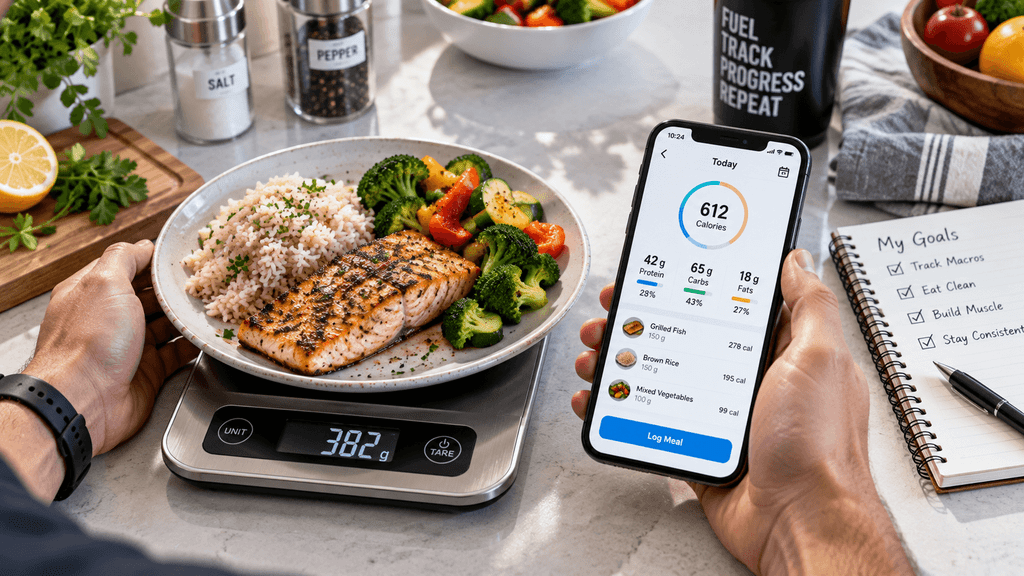
7. Should I track macros forever when building muscle?
Not necessarily. Once you’ve tracked for 3–6 months, you develop intuition about portion sizes. Many advanced lifters stop strict tracking and eat by feel because they’ve internalized the best macros for building muscle.
That said, I return to detailed tracking every few months to ensure I’m still hitting targets and not slipping.
The Bottom Line: Making Best Macros for Building Muscle Your New Normal
I’m going to be direct: understanding the best macros for building muscle and actually implementing it are two different things. You can read this entire article, know exactly what your targets should be, and still fail to build muscle because you won’t stick to it.
The difference between people who build impressive muscle and people who don’t often comes down to one thing: consistency with their nutrition. They calculated the best macros for building muscle for their situation, wrote them down, and showed up every single day.
Here’s my challenge to you: spend one week tracking your current macros honestly. See where you actually stand. Then spend the next 8 weeks implementing the best macros for building muscle as outlined here. Not perfectly just genuinely trying.
I’m confident you’ll see difference in your strength, muscle definition, and how you feel in the gym.
The science is solid. The framework works. The only variable left is you.