Introduction
When I first started experimenting with 16/8 intermittent fasting morning workout routines about three years ago, I honestly thought I’d be that person passing out halfway through a deadlift. Turns out, I was dead wrong and honestly, it became a game-changer for my fitness journey.
Here’s the reality: combining 16/8 intermittent fasting with morning workouts isn’t just some trendy fitness hack. It’s a legitimate approach that’s backed by science, embraced by serious athletes, and delivers tangible results when you do it right. But there’s also a lot of confusion around it. People ask me constantly: “Won’t I be too weak? Should I eat before working out? Is this actually safe?”
In this guide, I’m walking you through everything you need to know about 16/8 intermittent fasting morning workout strategies—from the science behind why it works, to the practical mistakes most people make, to how to structure your routine for real gains.
What Is 16/8 Intermittent Fasting and How Does It Work?
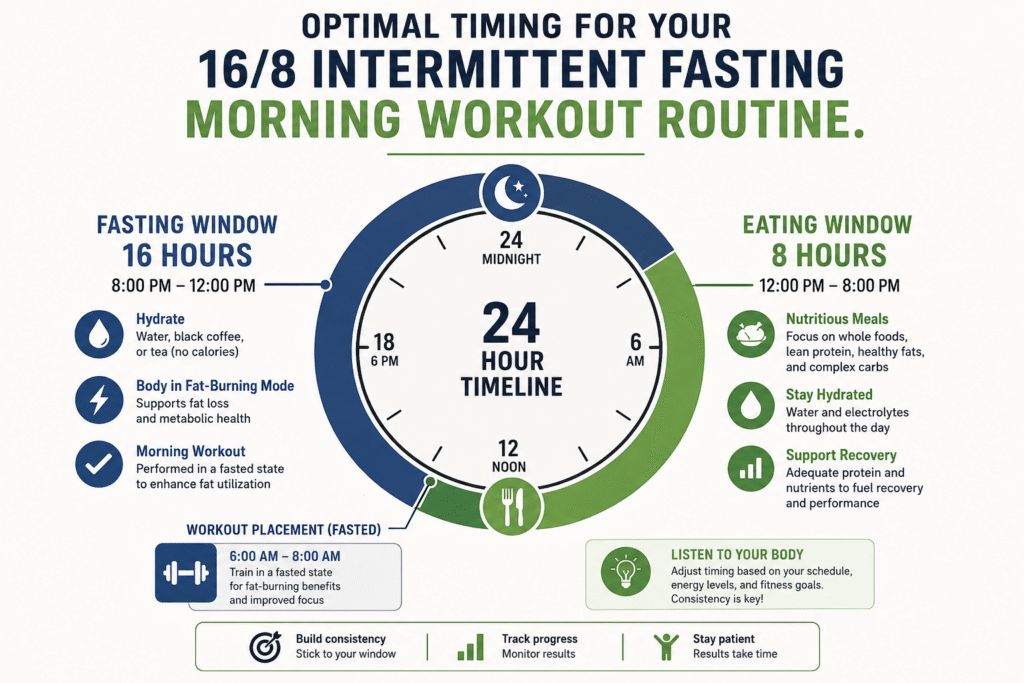
Let’s start with the basics. 16/8 intermittent fasting morning workout combinations start with understanding the fasting protocol itself. 16/8 means you’re eating within an 8-hour window and fasting for 16 hours. Most people do something like eating between noon and 8 p.m., which means your morning workout happens during the fasted state.
Your body has two primary fuel sources: glucose (carbs) and fat. When you’re fasting, your glycogen stores gradually deplete, and your body shifts toward burning fat for energy. This metabolic shift is partly why people gravitate toward 16/8 intermittent fasting and morning workouts—your body becomes more efficient at using fat as fuel, which has some pretty cool performance implications.
The beauty of this approach? You’re not completely deprived of energy. Your body holds onto stored glucose in the liver and muscles, which is usually enough to power through a morning workout. The catch is that this works best for moderate-intensity exercise, not max-effort strength sessions (though some people do manage both).
The Science Behind 16/8 Intermittent Fasting Morning Workout Performance
I’ll be honest—I used to think you had to eat before a morning workout. Then I dug into the research, and it challenged what I thought I knew.
When you do a 16/8 intermittent fasting morning workout, you’re training in a fasted state, typically 12-16 hours after your last meal. During this time, here’s what’s happening inside your body:
Increased Growth Hormone Production – Fasting naturally elevates human growth hormone (HGH). One study published in the Proceedings of the National Academy of Sciences found that HGH levels can increase by up to 2,000% during fasting in men, and 1,300% in women. This is huge because HGH supports muscle preservation, fat loss, and recovery.
Enhanced Fat Oxidation – Your body preferentially burns fat when glycogen is lower. This doesn’t necessarily mean you’ll lose muscle (that’s a myth), but you’ll definitely be working in a metabolic state optimized for fat loss.
Improved Insulin Sensitivity – Regular 16/8 intermittent fasting morning workout routines improve how your body handles glucose. Better insulin sensitivity means better nutrient partitioning—the nutrients you eat post-workout go to muscle tissue rather than fat storage.
Cellular Adaptation – Fasting triggers something called autophagy, which is basically your cells’ cleanup process. This promotes cellular repair and longevity. Some research suggests this process might enhance mitochondrial function, which improves aerobic capacity.
The bottom line? There’s legit science supporting why 16/8 intermittent fasting morning workout combinations work—it’s not just bro-science.
Timing Your Workout with 16/8 Intermittent Fasting Morning Workout
Timing is absolutely critical when you’re combining these two approaches. I’ve learned this the hard way through countless experiments.
When to Work Out During Your 16/8 Fast
The ideal window for a 16/8 intermittent fasting morning workout is typically 1-2 hours after waking, right before your first meal. Here’s why: your body has had just enough time to stabilize cortisol and adrenaline (which peak upon waking), but you’re still deep in your fasted state where fat oxidation is optimized.
If you wake at 6 a.m. and have your eating window from 12 p.m. to 8 p.m., the sweet spot for your 16/8 intermittent fasting morning workout is around 7-8 a.m. This gives you time to grab some water, maybe a black coffee or green tea, and get moving.
The Gradual Approach
When you first start experimenting with 16/8 intermittent fasting morning workout routines, don’t go all-in with heavy strength training immediately. Your body needs to adapt. I recommend:
- Week 1-2: Light morning walks or gentle yoga while fasting. Get comfortable with the feeling.
- Week 3-4: Light cardio (15-20 minutes). See how your energy responds.
- Week 5+: Once adapted, introduce your normal strength routine or moderate cardio.
This gradual progression prevents the crash that kills most people’s attempts at 16/8 intermittent fasting morning workout routines. Your nervous system and metabolic hormones need time to adjust.
Nutrition Strategy: What to Eat After Your 16/8 Intermittent Fasting Morning Workout
Here’s where most people sabotage themselves. They do a 16/8 intermittent fasting morning workout, break their fast with some processed garbage, and wonder why they don’t see results.
Breaking Your Fast Right
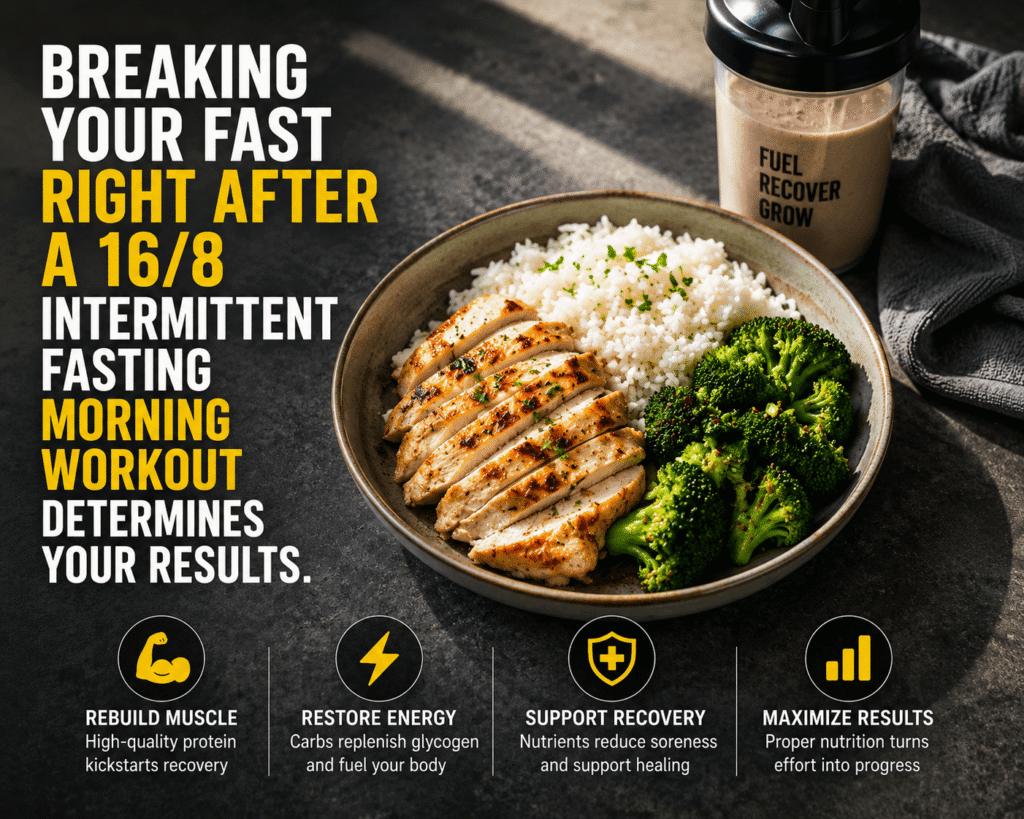
Your post-workout meal after a 16/8 intermittent fasting morning workout is critical. Timing matters you want to eat within 30-60 minutes of finishing. This meal should include:
Protein (25-40g minimum) – This preserves muscle tissue and provides amino acids for repair. After a 16/8 intermittent fasting morning workout, your muscles are primed to absorb nutrients.
Carbohydrates (30-50g) – Don’t fear carbs after training. You’ve depleted some glycogen, and carbs help replenish stores and spike insulin slightly (which is good post-workout). This supports muscle growth.
Healthy Fats (modest amount) – This slows digestion and provides satiety. Just don’t overdo it right after a 16/8 intermittent fasting morning workout since your body’s digestion is still normalizing.
Hydration – Drink at least 16-20 oz of water. You’ve been fasting all night plus sweating during your workout.
Real-World Example Meals After Your 16/8 Intermittent Fasting Morning Workout
- Greek yogurt (30g protein) + granola + berries + honey
- Whole grain toast + scrambled eggs (2-3) + avocado
- Grilled chicken breast (4 oz) + white rice + steamed broccoli
- Protein smoothie: Whey protein, banana, oats, almond milk, peanut butter
I personally rotate between a protein smoothie and toast with eggs depending on how my workout felt.
Common Mistakes People Make with 16/8 Intermittent Fasting Morning Workout Routines
I’ve made every mistake in the book, so let me save you the pain.
Mistake #1: Training Too Hard Too Soon
Jumping into intense strength training immediately when starting a 16/8 intermittent fasting morning workout is a surefire way to crash. Your body needs glycogen for max-effort training. If you’re fasted, save the heavy squats for when you’ve eaten.
Mistake #2: Ignoring Hydration
Most people doing 16/8 intermittent fasting morning workout routines forget that they’ve been without water (in terms of liquid intake) for 12+ hours. Dehydration tanks your performance. Drink water the moment you wake up—don’t wait until you’re thirsty during the workout.
Mistake #3: Skipping Electrolytes
If you’re doing an intense 16/8 intermittent fasting morning workout that’s longer than 45 minutes, you might want electrolytes (sodium, potassium, magnesium). These help with muscle function and prevent cramping.
Mistake #4: Not Eating Enough Post-Workout
A common trap when doing 16/8 intermittent fasting morning workout is thinking “I’ll keep it light.” Nope. You’ve been fasting, you’ve trained, and now your body needs fuel. Eat enough. You’re not going to get fat from one solid meal.
Mistake #5: Expecting Immediate Results
Building an effective 16/8 intermittent fasting morning workout routine takes 4-6 weeks minimum. Your body needs time to adapt to fasting and refuel properly. Stick with it before deciding if it works for you.
Who Should and Shouldn’t Do 16/8 Intermittent Fasting Morning Workout?
Real talk: this approach isn’t for everyone, and that’s okay.
You’re a Good Candidate If:
- You’re generally healthy with no underlying conditions
- You prefer morning training sessions
- You want to optimize fat loss while maintaining muscle
- You have a consistent schedule (fasting is easier with routine)
- You respond well to fasting (some people get terrible headaches)
Be Cautious If:
- You have a history of disordered eating
- You’re pregnant or breastfeeding
- You have blood sugar regulation issues (diabetes, prediabetes)
- You’re on medications that require food with administration
- You’re new to exercise and still building a foundation
If you’re in the cautious category, talk to your doctor before jumping into 16/8 intermittent fasting morning workout routines. There’s nothing wrong with being careful about your health.
Pros and Cons of 16/8 Intermittent Fasting Morning Workout Combinations
Pros:
✓ Efficient fat loss while preserving muscle mass
✓ Increased growth hormone production during fasting
✓ Improved insulin sensitivity over time
✓ Mental clarity and focus (for most people) during the fasted period
✓ Reduced meal prep complexity (eating in fewer hours)
✓ Potential longevity benefits from cellular repair (autophagy)
✓ Works well for people with a consistent schedule
Cons:
✗ Initial adjustment period can feel rough
✗ Not optimal for heavy strength training (moderate cardio/light weights work better)
✗ Potential energy crashes if you don’t hydrate properly
✗ Social eating can become complicated (especially business meals)
✗ Some people experience increased cortisol if stressed
✗ Not sustainable long-term for everyone
✗ Requires consistent discipline with meal timing
Practical Tips for Succeeding with 16/8 Intermittent Fasting Morning Workout

Tip #1: Start with Black Coffee or Green Tea
When you wake up and it’s time for your 16/8 intermittent fasting morning workout, don’t just dive in dry. A cup of black coffee or green tea (zero calories, no sugar) can:
- Boost metabolism slightly
- Suppress hunger
- Improve mental clarity
- Enhance fat burning
The caffeine is genuinely helpful, and there’s no downside since you’re not breaking the fast.
Tip #2: Time Your Workouts Consistently
Your body adapts to routine. If you do your 16/8 intermittent fasting morning workout at 7 a.m. every day, your circadian rhythm adjusts. You’ll have more consistent energy and better results. Bouncing between 6 a.m. one day and 9 a.m. the next confuses your system.
Tip #3: Supplement with Amino Acids If Needed
If you’re doing a particularly intense 16/8 intermittent fasting morning workout and worried about muscle loss, consider branched-chain amino acids (BCAAs) right before training. This is controversial among purists, but a small dose (5-10g) of BCAAs won’t truly break your fast and provides insurance against catabolism.
Tip #4: Track Your Metrics
When you start a 16/8 intermittent fasting morning workout routine, measure what matters:
- Energy levels (1-10 scale)
- Workout performance (reps, weight, time)
- Body composition (monthly photos > scale weight)
- Mood and sleep quality
- Digestion quality
This gives you data to adjust. If something isn’t working, you’ll know quickly.
Tip #5: Stay Flexible
Not every 16/8 intermittent fasting morning workout day will be perfect. Some days you’ll have crazy energy. Other days you’ll feel flat. Don’t stress. The consistency over weeks and months is what creates results, not perfection on individual days.
Product Recommendations for Optimizing Your 16/8 Intermittent Fasting Morning Workout
Based on my years of experimentation with 16/8 intermittent fasting morning workout routines, here are products that genuinely made a difference:
1. Quality Whey Protein Powder
Optimum Nutrition Gold Standard Whey
Why: After your 16/8 intermittent fasting morning workout, you need fast-digesting protein. This is the gold standard I’ve used for years. It mixes easily, tastes good, and delivers 24g protein per scoop without unnecessary additives.
2. Electrolyte Supplement
LMNT Electrolyte Drink Mix
Why: If you’re doing longer 16/8 intermittent fasting morning workout sessions (60+ minutes), electrolytes prevent cramping and maintain performance. These packets are clean no sugar, no artificial sweeteners. I use one during particularly intense morning sessions.
3. Blender for Post-Workout Smoothies
Ninja Professional Blender
Why: Making your post-16/8 intermittent fasting morning workout smoothie is quick with a good blender. Spending 2 minutes on a protein smoothie is infinitely better than skipping your post-workout meal because you’re lazy.
4. Fitness Tracker or Smartwatch
Apple Watch Series 9 or Garmin Forerunner 965
Why: Tracking heart rate variability, sleep, and workout intensity helps you optimize 16/8 intermittent fasting morning workout routines. The data tells you whether you’re recovered or overtraining.
5. Creatine Monohydrate
Optimum Nutrition Micronized Creatine
Why: One of the most researched supplements ever. When doing 16/8 intermittent fasting morning workout routines, creatine supports muscle preservation and strength during the fasted state. 5g daily, mixed into your post-workout smoothie.
6. Omega-3 Supplement
Nordic Naturals Omega-3 Fish Oil
Why: During 16/8 intermittent fasting morning workout periods, omega-3s support recovery, reduce inflammation, and help with hormonal balance. Your body’s in a sensitive state post-training, and clean fats matter.
16/8 Intermittent Fasting Morning Workout FAQ
1. Can I Do HIIT Training During 16/8 Intermittent Fasting Morning Workout?
Short answer: Yes, but carefully. High-intensity interval training during a 16/8 intermittent fasting morning workout burns more glycogen quickly. You can do it, but keep sessions shorter (20-30 minutes max) and ensure you have stable energy. I’d recommend starting with moderate-intensity cardio and progressing to HIIT once your body adapts.
2. Should I Have a Pre-Workout Meal Before My 16/8 Intermittent Fasting Morning Workout?
This defeats the purpose of the fast—that’s the whole point. The fasted state is what creates the hormonal benefits. If you absolutely need energy, stick to black coffee, green tea, or water. If you’re constantly crashing, you might need a different approach (like pushing your first meal earlier or adjusting workout intensity).
3. How Long Does It Take to See Results from 16/8 Intermittent Fasting Morning Workout?
You might feel effects immediately (better focus, less bloating), but visible body composition changes take 4-8 weeks depending on your starting point and how consistently you execute. Patience matters.
4. Will 16/8 Intermittent Fasting Morning Workout Kill My Muscle Gains?
No, not if you’re eating enough during your eating window and doing reasonable training (not running marathons fasted). In fact, the hormonal environment during 16/8 intermittent fasting morning workout routines supports muscle preservation because of elevated growth hormone.
5. Is 16/8 Intermittent Fasting Morning Workout Safe Long-Term?
For most healthy adults, yes. The research on intermittent fasting shows it’s safe when done properly. However, “long-term” is subjective. Some people thrive on it indefinitely. Others prefer cycling on and off every few months. Listen to your body.
6. Can Women Do 16/8 Intermittent Fasting Morning Workout Routines?
Absolutely. However, some women are more sensitive to fasting due to hormonal cycling. If you menstruate, you might find 16/8 intermittent fasting morning workout easier in certain phases of your cycle (follicular phase, typically). Experiment and adjust if needed.
7. What’s the Best Water Intake During 16/8 Intermittent Fasting Morning Workout Training?
Drink at least 16-20 oz immediately upon waking, then sip another 16-20 oz during your 16/8 intermittent fasting morning workout. Post-workout, drink another 20-30 oz. Hydration is non-negotiable.
Sample Weekly Schedule for 16/8 Intermittent Fasting Morning Workout
Here’s what a realistic week looks like when I’m dialed in:
| Day | Wake Time | Workout | Break Fast | Eating Window | Notes |
|---|---|---|---|---|---|
| Monday | 6:00 a.m. | 7:00-7:45 a.m. (Strength) | 8:00 a.m. | 12 p.m. – 8 p.m. | Full energy, heavier weights |
| Tuesday | 6:00 a.m. | 7:00-7:30 a.m. (Cardio) | 8:00 a.m. | 12 p.m. – 8 p.m. | Moderate-paced run |
| Wednesday | 6:00 a.m. | Rest day | 12:00 p.m. (on schedule) | 12 p.m. – 8 p.m. | Recovery focus |
| Thursday | 6:00 a.m. | 7:00-7:50 a.m. (Strength) | 8:00 a.m. | 12 p.m. – 8 p.m. | Slightly lighter than Monday |
| Friday | 6:00 a.m. | 7:00-7:30 a.m. (Light cardio) | 8:00 a.m. | 12 p.m. – 8 p.m. | Active recovery pace |
| Saturday | 7:00 a.m. | 8:00-8:45 a.m. (Strength) | 9:00 a.m. | 1 p.m. – 9 p.m. | Later schedule on weekends |
| Sunday | 8:00 a.m. | Optional (walk/yoga) | 12:00 p.m. | 12 p.m. – 8 p.m. | Leisurely morning |
Final Thoughts: Is 16/8 Intermittent Fasting Morning Workout Right for You?
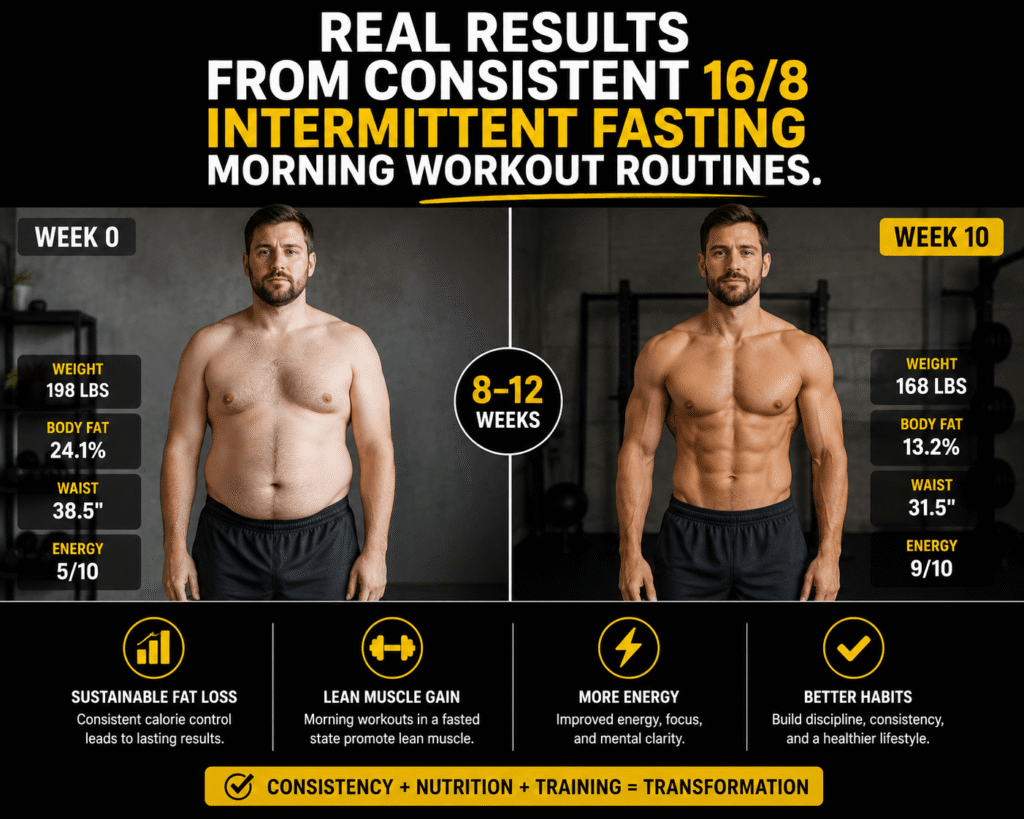
Here’s my honest take after years of doing 16/8 intermittent fasting morning workout routines: it’s not a magic bullet, but it’s an exceptionally efficient tool when your life and body are aligned with it.
The benefits—fat loss, muscle preservation, improved hormonal health, mental clarity—are real. The science is solid. But you have to execute it correctly. You can’t wing it. You can’t expect results in two weeks. You can’t do heavy strength training every day fasted and expect to thrive.
What I’ve found is that 16/8 intermittent fasting morning workout works best for people who:
- Have a relatively stable schedule
- Are willing to be intentional about nutrition
- Can commit to at least 8-12 weeks of consistency
- Respond well to fasting (not everyone does)
- Have realistic expectations about results
If that’s you, start small. Do a 16/8 intermittent fasting morning workout with light cardio or moderate strength training. See how you feel. Track your metrics. Adjust as needed. After a month, you’ll have real data about whether this approach enhances your fitness or creates more problems than it solves.
The goal isn’t to follow some perfect protocol. The goal is finding what works for you and executing it consistently. If 16/8 intermittent fasting morning workout routines are that approach, you’ll see results. If they’re not your thing, that’s fine too—plenty of other strategies work.
What matters is that you’re intentional, consistent, and always learning from your body’s feedback.