Introduction: Why Your Recovery Matters as Much as Your Training

Here’s something most fitness enthusiasts overlook: what you do after your intense workout sessions might matter more than the session itself. I learned this the hard way after years of pushing myself in the gym without giving my body proper recovery time. The result? Constant soreness, plateaued progress, and unnecessary fatigue.
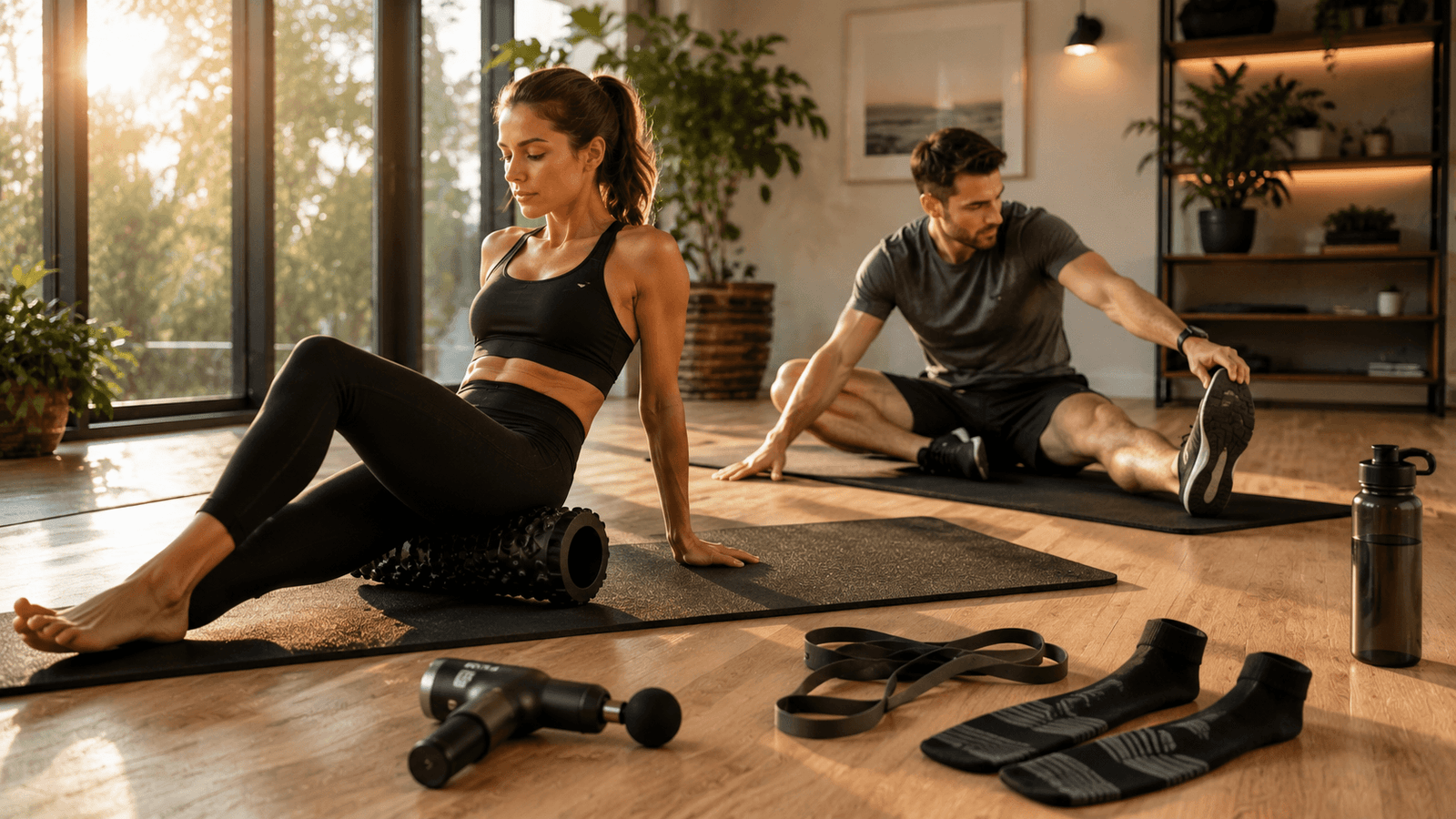
That’s where a full body active recovery workout comes in. It’s not about lying around doing nothing (passive recovery has its place, sure). Instead, it’s about strategically moving your body in ways that accelerate healing, flush metabolic waste, and prime you for your next training session.
A full body active recovery workout is low-intensity movement designed to increase blood flow without adding stress to your joints and muscles. Think of it as giving your body the green light to heal while keeping it engaged. The beauty? You can do it on your off-days, and it actually makes you feel better, not worse.
In this guide, I’m sharing exactly how to structure a full body active recovery workout that works, what exercises belong in yours, and why this simple practice can transform your fitness results. Let’s dive in.
What is Active Recovery and Why It Actually Works
Before jumping into the mechanics, let’s clarify what active recovery really is—and what it isn’t.
Active recovery is deliberate, light-intensity movement that promotes blood circulation without creating new muscle damage. The key word here is light. We’re talking 40–60% of your maximum heart rate, where you can hold a conversation without huffing and puffing.
When you complete a hard training session, your muscles accumulate metabolic byproducts—lactate, hydrogen ions, and other compounds that contribute to that post-workout soreness. Your lymphatic system (which doesn’t have a pump like your cardiovascular system) relies on muscle movement to clear these waste products. Passive rest alone means these compounds hang around longer.
A full body active recovery workout jumpstarts your lymphatic system. The gentle muscle contractions act as a pump, moving fluid and waste out of fatigued muscles faster. This reduces delayed-onset muscle soreness (DOMS), speeds up nutrient delivery for repair, and gets you ready to train hard again sooner.
The research backs this up. Studies show that light activity between intense training sessions improves recovery markers, reduces subjective soreness, and maintains performance better than complete rest alone.
The Science Behind Full Body Active Recovery
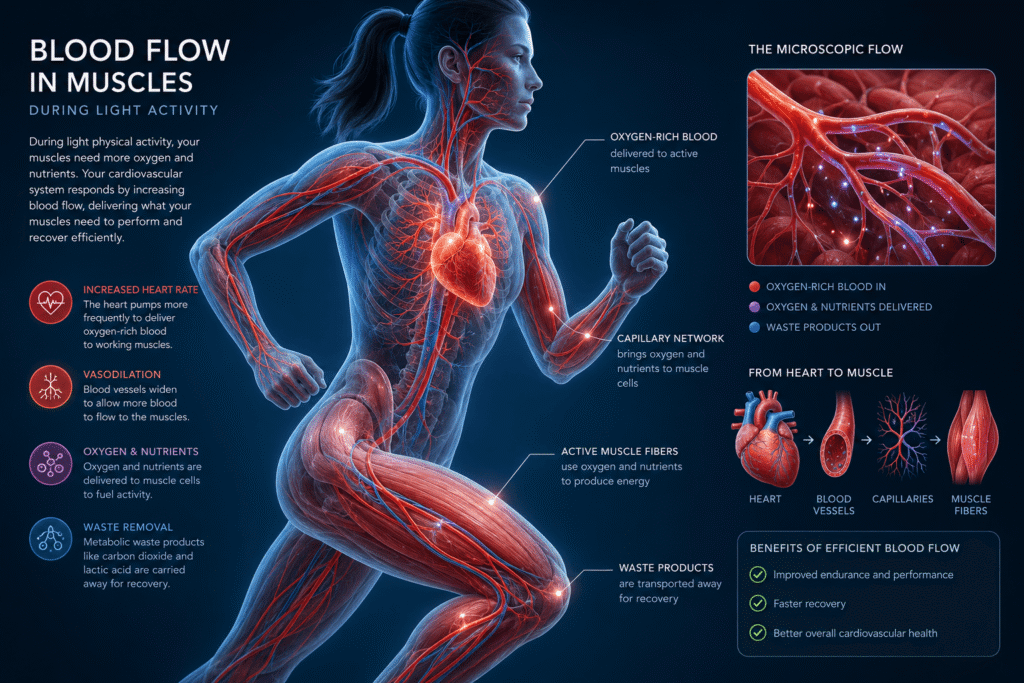
Your body doesn’t repair itself during training it repairs itself during recovery. This is where the adaptation happens. But here’s the nuance: passive recovery (doing absolutely nothing) is fine, but it’s also passive.
A full body active recovery workout speeds up the recovery process by:
1. Enhancing Blood Flow & Nutrient Delivery
Light movement dilates blood vessels and increases circulation. Fresh oxygen and nutrients reach recovering muscles faster, supporting the repair process. Your muscles need amino acids, vitamins, and minerals to rebuild stronger. Better blood flow = faster access to these resources.
2. Flushing Metabolic Waste
Lactate and other byproducts from intense exercise accumulate in muscles and contribute to soreness. Light movement helps clear these faster than sitting still. You’ve probably noticed that a light walk the day after a hard leg day actually makes your legs feel less sore. That’s this mechanism in action.
3. Reducing Inflammation (The Good Way)
Wait isn’t inflammation bad? Not entirely. Acute inflammation is part of the repair process. The issue is excessive inflammation slowing recovery. A full body active recovery workout moderates this inflammatory response without suppressing the beneficial adaptation signals your body needs.
4. Improving Joint Mobility & Function
Light, controlled movement keeps joints lubricated and maintains your range of motion. When you train hard, muscle tightness can limit mobility. Gentle movement restores this, which actually prevents injury long-term.
5. Reducing Elevated Cortisol Levels
Intense training raises cortisol (your stress hormone). If training volume is too high with insufficient recovery, cortisol stays elevated, which impairs muscle growth and mood. Light, enjoyable movement actually lowers cortisol, helping your nervous system recover alongside your muscles.
When to Do a Full Body Active Recovery Workout
Timing matters. You don’t want to do active recovery before a heavy training session (it can slightly reduce performance), but it’s perfect:
- The day after intense leg day – When your quads and hamstrings are hammered
- Between hard training sessions – Especially if you train multiple times per week
- Deload weeks – When you’re intentionally reducing volume
- When you’re feeling beat up – Your body’s signal that it needs recovery
- On scheduled off-days – To stay active without adding stress
The rule of thumb: if you’re not sure whether to do a full body active recovery workout, ask yourself, “Could I do this for 30 minutes without elevating my heart rate significantly?” If yes, it’s probably appropriate.
Best Exercises for Your Full Body Active Recovery Workout
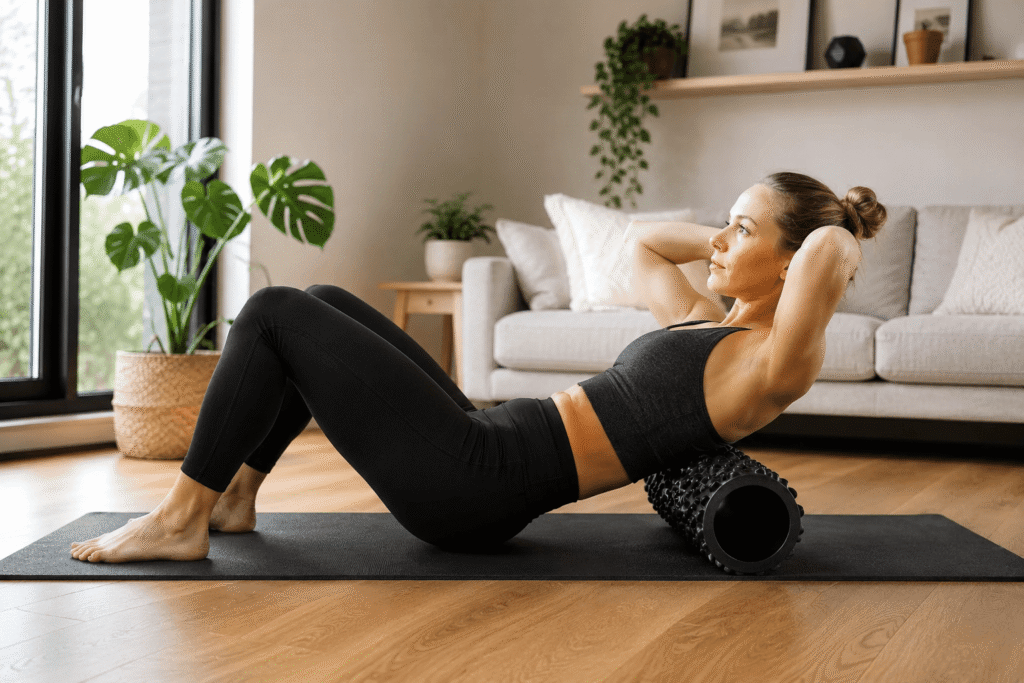
The exercises in a full body active recovery workout should feel good, not challenging. If you’re breathing hard or feeling the burn, you’ve gone too intense.
Upper Body Active Recovery Moves
Arm Circles & Shoulder Rolls
Start with 10–15 slow, controlled arm circles in each direction. These lubricate your shoulder joint and wake up your upper back. Follow with shoulder rolls—backward first, then forward. Keep your core slightly engaged.
Band Pull-Aparts
Grab a light resistance band. Hold it at shoulder width in front of you. Slowly pull the band apart, squeezing your shoulder blades together for a 2-second hold. Release slowly. Do 15–20 reps. This activates your rear delts and upper back without heavy loading.
Cat-Cow Stretches
This classic yoga move deserves a spot in every full body active recovery workout. On your hands and knees: arch your back, drop your chest, and look slightly up (cow). Then round your spine, tuck your chin, and pull your belly button toward your spine (cat). Move between positions slowly and mindfully for 10–12 cycles.
Lower Body Active Recovery Moves
Bodyweight Leg Swings
Hold onto something stable. Swing one leg forward and back in a slow, controlled manner. Don’t force it—let momentum carry you. Do 12–15 swings each direction per leg. This keeps hip mobility sharp without creating soreness.
Glute Bridges (Light)
Lie on your back, knees bent, feet flat. Slowly lift your hips toward the ceiling, squeezing your glutes at the top for 2 seconds. Lower down. Do 15–20 slow, deliberate reps. This reactivates your posterior chain gently after a hard leg day.
Quad & Hip Flexor Stretches
Kneel on one knee, the other foot in front of you (90/90 position). Gently lean forward until you feel a stretch in the back hip and quad of the kneeling leg. Hold for 20–30 seconds per side. This counters the tightness from heavy training.
Full Body Movements
Walking or Light Cycling
This is the gold standard for full body active recovery workout sessions. A 20–30 minute easy walk keeps your heart rate low while maintaining blood flow. Same with gentle cycling. You should be able to chat comfortably with someone.
Swimming (Easy Pace)
If you have pool access, swimming is phenomenal for recovery. The water supports your joints while light movement enhances circulation. 20–30 minutes of easy swimming feels restorative.
Yoga Flow (Restorative or Gentle Hatha)
Forget power yoga. Look for restorative or gentle sequences designed around longer holds and breathing. These typically include stretches for all major muscle groups and genuinely feel good the day after a hard session.
Foam Rolling (Light Pressure)
Self-myofascial release is underrated in recovery protocols. Spend 30–60 seconds per muscle group on a foam roller, moving slowly and gently. If you hit a particularly sore spot, pause and breathe. Don’t aggressively smash your muscles—that defeats the purpose of a full body active recovery workout.
Sample Full Body Active Recovery Workout (30 Minutes)
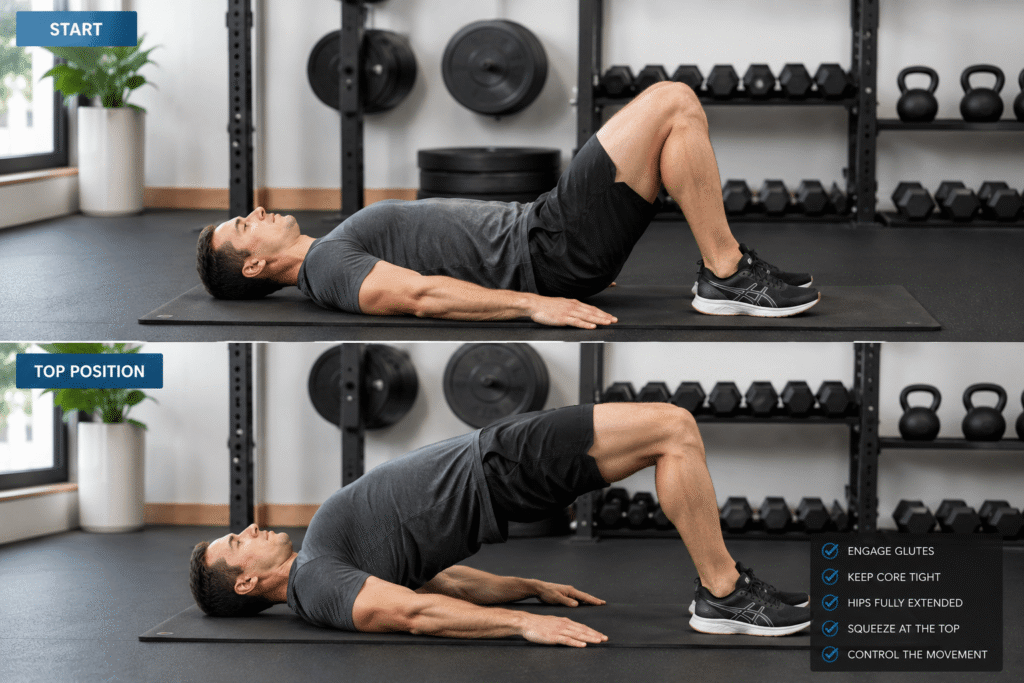
Here’s a practical template you can use:
Warm-Up (3 minutes)
- 10 arm circles each direction
- 10 shoulder rolls each direction
- 5 cat-cow cycles
Main Routine (22 minutes)
- 5 minutes easy walking (on treadmill or outside)
- Band pull-aparts: 2 sets × 15 reps
- Glute bridges: 2 sets × 15 reps
- Light cycling or rowing: 5 minutes at conversational pace
- Quad stretches: 30 seconds each leg
- Hip flexor stretches: 30 seconds each leg
- Leg swings: 12 each direction per leg
- Light walking: remaining time (about 5 minutes)
Cool-Down & Stretching (5 minutes)
- Hamstring stretch: 30 seconds each leg
- Chest opener stretch: 30 seconds
- Child’s pose: 1 minute breathing work
Total time: 30 minutes. Heart rate elevation: minimal. Soreness reduction: significant.
Affiliate Product Recommendations for Your Recovery Routine
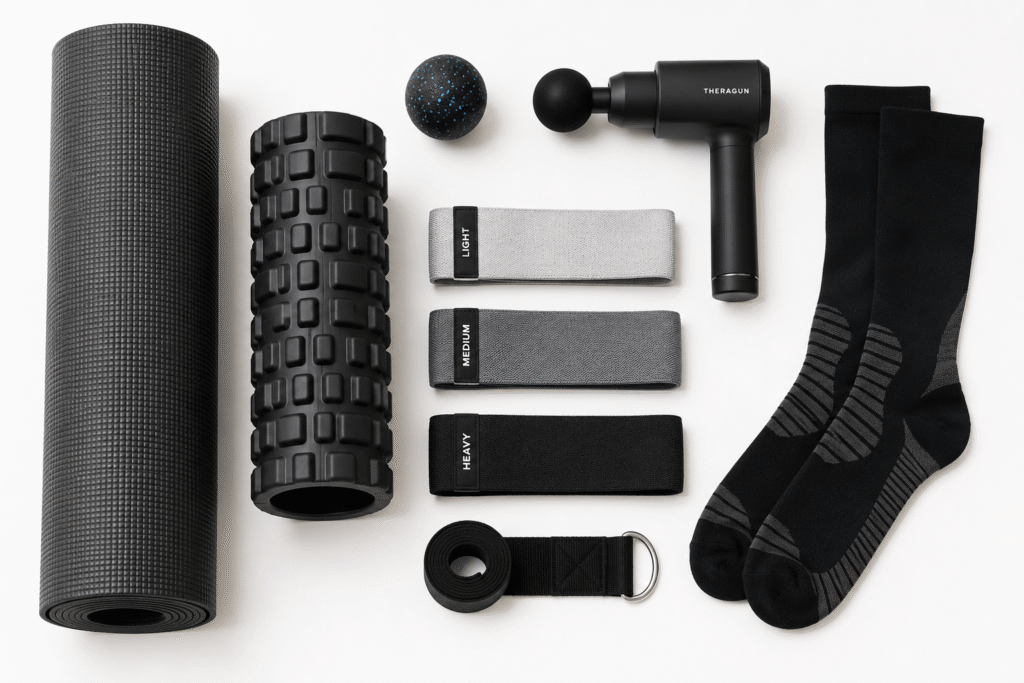
When you’re serious about recovery, certain tools make the process easier and more effective. Based on years of testing fitness equipment, here are my genuine recommendations:
1. Hyperice Hypervolt GO Plus
Why I recommend it: This percussion massager is legitimately game-changing for active recovery days. It doesn’t replace movement, but it complements a full body active recovery workout beautifully. I use mine for 2–3 minutes on any area that feels particularly sore.
The cordless design means you can use it anywhere, and the multiple intensity levels let you dial in exactly what feels right without overdoing it. At around $200, it’s an investment, but if you’re training regularly, it’s worth it.
2. Yoga Mat – Liforme Pro
Why I recommend it: A quality yoga mat makes active recovery actually enjoyable. The Liforme Pro is thicker than standard mats (5mm), offers excellent grip, and is made from sustainable materials. When you’re doing stretches and light flows as part of your full body active recovery workout, having a mat that feels good under your hands and knees matters more than you’d think.
3. Foam Roller – TriggerPoint GRID
Why I recommend it: Not all foam rollers are created equal. The TriggerPoint GRID has grooves designed to reduce pressure on sensitive areas, making it less aggressive than solid rollers. For active recovery purposes, this is ideal. You get myofascial release without the “ouch” factor that makes people avoid rolling altogether.
4. Resistance Bands Set – Serious Steel Fitness
Why I recommend it: These bands are durable and come in multiple resistances. For a full body active recovery workout, you need light resistance that actually feels good, not painful. This set lets you adjust easily without buying multiple separate bands.
5. Recovery Compression Socks – 2XU
Why I recommend it: Compression helps blood flow and feels genuinely restorative to wear post-workout. I wear these after leg day for the next 2–3 hours, and they noticeably reduce how sore I feel. They’re pricey (~$60–80), but they last forever.
Pros & Cons of Active Recovery
Pros
✅ Reduced Muscle Soreness – Active recovery genuinely minimizes DOMS, especially when done consistently.
✅ Faster Recovery Between Sessions – You can train harder more frequently because you’re recovering faster.
✅ Improved Mobility & Flexibility – The light movement keeps joints healthy and your range of motion sharp.
✅ Lower Injury Risk – Gentle, consistent movement maintains joint health and muscle balance.
✅ Mental Health Benefits – Light activity is mood-boosting and stress-reducing (cortisol management).
✅ Doesn’t Require Equipment – A walk costs nothing. You don’t need fancy gear for a full body active recovery workout.
✅ Sustainable Long-Term – Unlike intense training that accumulates fatigue, active recovery is something you can do indefinitely.
Cons
❌ Takes Time – 30 minutes 1–2 times per week isn’t huge, but it requires scheduling.
❌ Requires Discipline – It’s tempting to skip because it feels “easy.” You have to commit even though you’re not getting the adrenaline rush of a hard workout.
❌ Individual Variability – What works perfectly for someone might not be ideal for you. Some people benefit more than others.
❌ Not a Substitute for Nutrition – A full body active recovery workout helps, but if your diet is poor, recovery still suffers.
❌ Requires Listening to Your Body – You have to differentiate between “good tired” and “actually injured.” This takes experience.
Practical Tips to Maximize Your Recovery Workouts

1. Combine Active Recovery With Other Recovery Modalities
Don’t rely solely on a full body active recovery workout. Pair it with adequate sleep (7–9 hours), proper nutrition, and hydration. These work synergistically. The best athletes do all of them.
2. Time Your Active Recovery Correctly
The best time is typically the day after a hard session, not the same day. Same-day recovery (immediately after hard training) can interfere with adaptation signals. 24 hours later is ideal.
3. Keep Your Heart Rate Low
Aim for 40–60% of max heart rate. If you have a fitness tracker, use it. You want to be able to chat comfortably while moving. The second it becomes a workout, you’ve crossed the line.
4. Listen to Your Body
If you’re still sore, do a full body active recovery workout. If you’re feeling general fatigue or lethargy, consider a full rest day instead. Recovery modalities should make you feel better, not worse.
5. Make It Enjoyable
Active recovery works best when you don’t dread it. If you hate walking, find something you like—swimming, yoga, cycling. The consistency matters more than the specific activity.
6. Track How You Feel
Keep a simple log. Rate soreness, mood, and energy levels. You’ll start seeing patterns: “Active recovery on Tuesday really helped my Thursday session feel better.” This builds conviction to keep doing it.
7. Don’t Skip the Breathing
During stretches and lighter movements, focus on deep, diaphragmatic breathing. This activates your parasympathetic nervous system (the “rest and digest” system) and genuinely accelerates recovery.
Common Mistakes to Avoid With Active Recovery
❌ Going Too Hard – If your full body active recovery workout elevates your heart rate significantly, you’ve overdone it. Dial it back.
❌ Skipping It When Sore – This is exactly when you need it most. Light movement accelerates recovery far better than sitting around.
❌ Treating It as Another Workout – Active recovery has different goals than training. You’re not building muscle; you’re facilitating repair.
❌ Ignoring Sleep & Nutrition – A full body active recovery workout is one piece of the puzzle. Without sleep and food, it’s insufficient.
❌ Assuming One Session Does It All – Recovery happens from cumulative actions: sleep, nutrition, hydration, active recovery, and total training volume.
❌ Not Adjusting for Your Sport – A powerlifter’s active recovery looks different from a runner’s. Match the activity to your primary training.
FAQ: Everything You Need to Know About Full Body Active Recovery
1. How often should I do a full body active recovery workout?
Most people benefit from 1–3 sessions per week, strategically placed on off-days or light days between hard sessions. If you train 4–5 days per week, aim for 1–2 recovery sessions. If you train 6+ days, you might benefit from more. Pay attention to how you feel.
2. Can I do active recovery on the same day as my main workout?
Technically yes, but timing matters. If you do it immediately after a hard session, research suggests it might blunt some adaptation signals. Better practice: easy movement on a completely separate day, or very light activity 24+ hours after your hard session.
3. Is a full body active recovery workout better than just resting?
For most people, yes. Research shows light movement accelerates recovery of soreness and readiness compared to complete rest. However, some deep recovery (sleep, nutrition, stress management) can’t be replaced by movement. Use active recovery alongside proper rest, not instead of it.
4. How do I know if my active recovery is the right intensity?
The “talk test” is reliable: you should be able to speak in full sentences without breathing hard. Your heart rate should stay below 60% of max (roughly 70–120 bpm for most people, but use a monitor if you want precision). If you’re sweating or breathing hard, dial it back.
5. Can I combine a full body active recovery workout with stretching?
Absolutely. In fact, this is ideal. Light movement (5–10 minutes) followed by dedicated stretching (10–15 minutes) is a perfect full body active recovery workout structure. Combine them for best results.
6. What if I don’t have time for a full 30-minute session?
Do what you can. Even 15–20 minutes of easy walking or light yoga counts and provides meaningful benefits. Something is infinitely better than nothing. You don’t need a perfect full body active recovery workout; you need a consistent one.
7. Should I do active recovery if I’m injured or in pain?
This depends entirely on the injury. Mild soreness? Definitely. Acute injury or sharp pain? No. Work with a physical therapist or doctor to determine what movement is safe. Some injuries require complete rest initially, while others benefit from specific, gentle rehab work (which is different from active recovery).
Conclusion: Make Active Recovery Part of Your Training Program

Here’s the reality: the difference between average results and exceptional results rarely comes from one single factor. It comes from consistently optimizing everything. Your training matters. Your nutrition matters. Your sleep matters. And yes, your full body active recovery workout matters too.
A full body active recovery workout isn’t about being “tough” or pushing through pain. It’s about being smart with your recovery. It’s about understanding that your body adapts during rest, not during the grind. And it’s about giving yourself the best chance to perform better next session.
The good news? You already have everything you need. A 30-minute walk costs nothing. Stretching costs nothing. Light movement at home costs nothing. A full body active recovery workout doesn’t require fancy equipment (though some tools genuinely help if you want to invest).
Start this week. Pick one day after your most demanding session and do a 30-minute active recovery routine. Notice how you feel the next day. I’m betting you’ll feel less sore, more mobile, and genuinely more ready to hit your next hard training session.
That’s the compound effect of recovery working for you.