Introduction
Building a strong back doesn’t require an expensive gym membership or fancy cable machines. If you have a set of dumbbells and commitment, you can develop a powerful, sculpted back right from your living room.
I’ve spent years training clients and building my own physique using dumbbells exclusively. What surprised me most? The results rival traditional gym training when you understand proper form and progression. Back exercises at home with dumbbells aren’t just convenient they’re genuinely effective.
In this guide, you’ll discover:
- Which back exercises at home with dumbbells deliver the fastest results
- Proper form cues to maximize muscle activation
- How to progress without access to a commercial gym
- Real-world strategies I’ve used to transform backs using just dumbbells
- Equipment recommendations and where to find them
Whether you’re a beginner starting your fitness journey or an experienced lifter optimizing home workouts, back exercises at home with dumbbells offer surprising versatility.
Why Back Exercises at Home With Dumbbells Work So Well
Most people overlook back training. They chase visible muscles—biceps, chest, shoulders. But your back comprises nearly 40% of your upper body musculature, and training it creates impressive posture, prevents injury, and dramatically improves aesthetics.
The beauty of back exercises at home with dumbbells? You work against genuine resistance. Unlike bodyweight rows that plateau quickly, dumbbells allow progressive overload—the fundamental driver of muscle growth.
Key advantages:
- Dumbbells force stabilizer muscle engagement
- Single-arm variations correct strength imbalances
- Minimal space required (a 6×6 foot area suffices)
- Time-efficient workouts (30-45 minutes)
- Joint-friendly progression when managed properly
The Best Back Exercises at Home With Dumbbells
1. Dumbbell Bent-Over Rows (The Foundation)
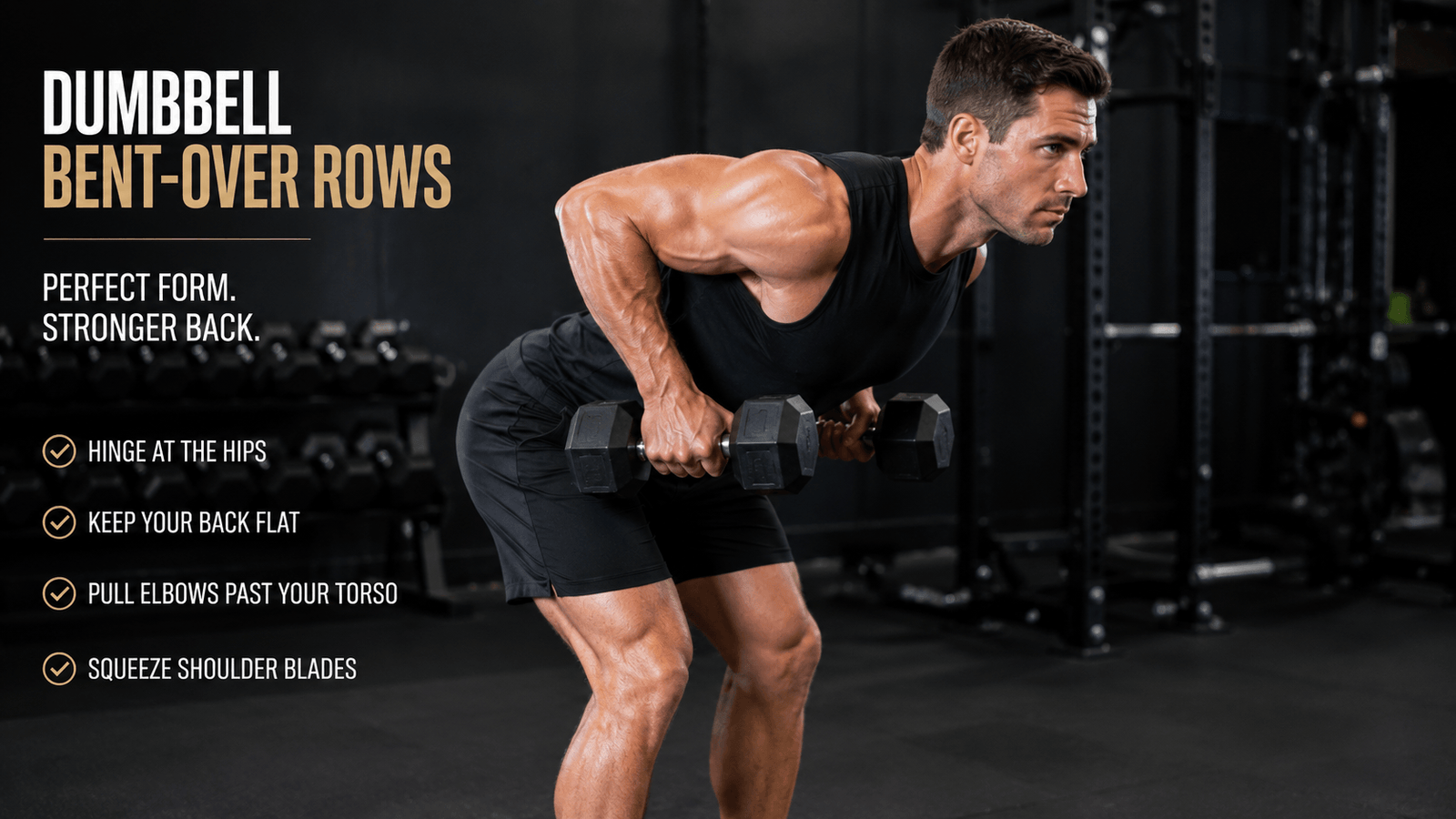
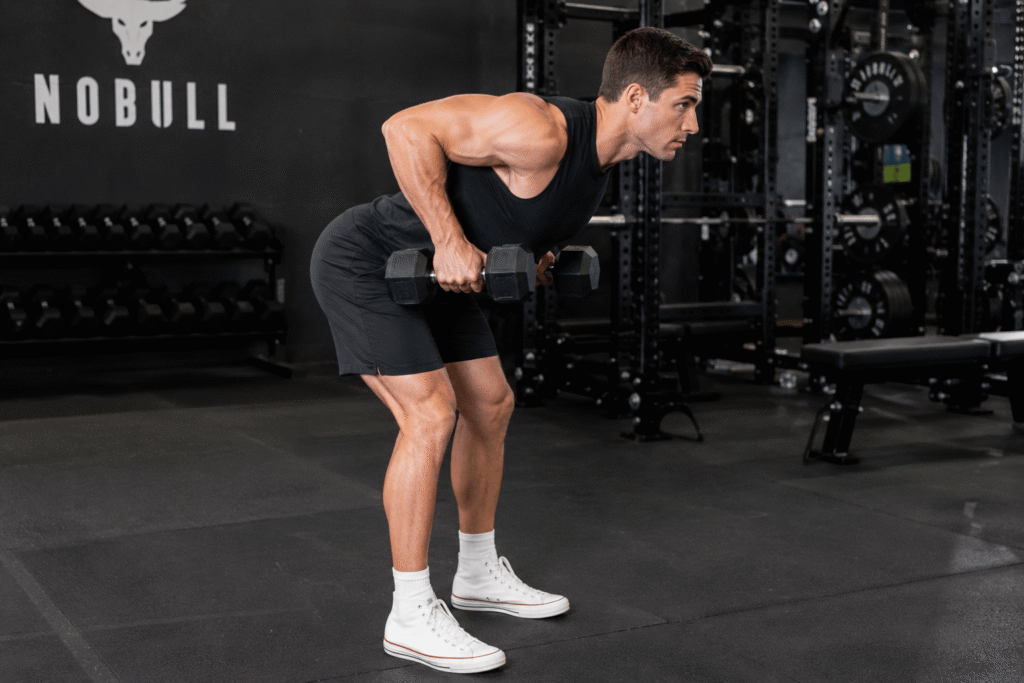
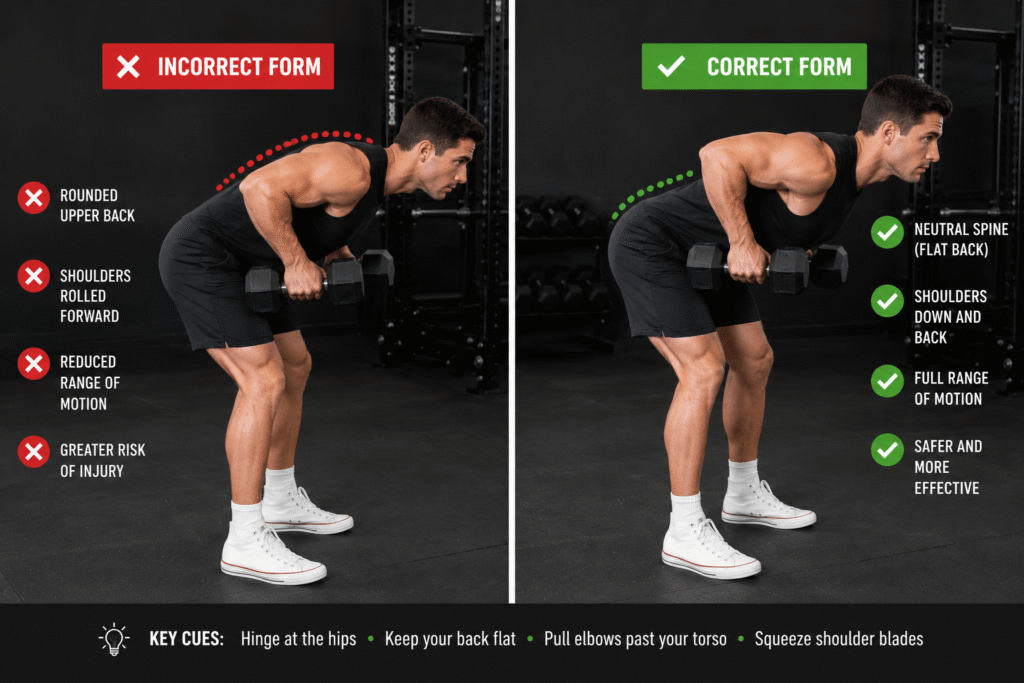
This is the cornerstone exercise. Bent-over rows build thick lat muscles and upper back strength.
Proper Form:
- Stand with feet shoulder-width apart, dumbbells at arm’s length
- Hip hinge forward until your torso reaches 45-90 degrees (adjust based on flexibility)
- Maintain a neutral spine imagine holding a coin between your shoulder blades
- Pull dumbbells toward your hip/ribcage, squeezing at the top
- Control the descent for 2-3 seconds
- Complete 8-12 reps per set
Pro Tip: Many beginners row too high, engaging arms instead of back. Row toward your hips, not your chest. Feel the contraction in your lats (the large muscles on your sides).
2. Single-Arm Dumbbell Rows
Single-arm variations eliminate compensation patterns and build anti-rotation core strength.
How to Execute:
- Stagger your stance (one foot forward)
- Row one dumbbell while the opposite arm extends for balance
- Maintain torso stability resist rotating
- This exercise is harder than it seems; reduce weight accordingly
- 10-12 reps per side, 3 sets
Why I Love Them: I’ve noticed single-arm rows quickly reveal strength imbalances. Your weaker side typically fatigues first, allowing you to address it directly.
3. Dumbbell Pullovers
Pullovers uniquely stretch and strengthen the chest, back, and serratus anterior simultaneously.
Execution:
- Lie perpendicular across a bench (upper back supported)
- Hold one dumbbell with both hands above your chest
- Lower the weight in an arc toward the floor while maintaining slight elbow bend
- Stretch your ribcage feel the chest and lats engage
- Return to starting position
- 10-15 reps, 3 sets
This exercise often feels awkward initially. Practice with lighter weight. The movement pattern is more important than load here.
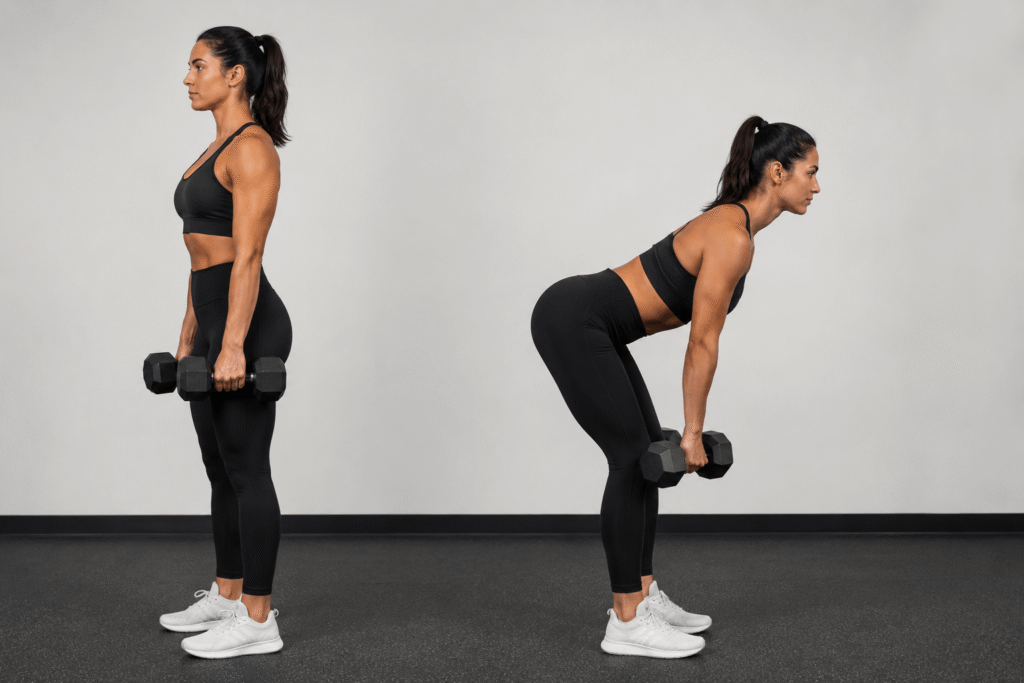
4. Dumbbell Deadlifts (Posterior Chain Master)
Deadlifts aren’t exclusively for backs, but they’re essential for posterior chain development.
Form Breakdown:
- Stand with feet hip-width apart
- Hold dumbbells at your sides
- Hip hinge, keeping dumbbells close to your legs
- Drive through heels, extending hips and knees simultaneously
- Stand tall at the top this is full extension
- Lower with control, hinging at hips
- 6-10 reps, 3-4 sets
Safety Note: Never round your lower back. If you can’t maintain neutral spine, reduce weight immediately. I’ve seen more injuries from form breakdown than any other cause.
5. Renegade Rows (Advanced Core Work)
Renegade rows combine back training with serious core engagement.
Setup:
- Assume a plank position with hands on dumbbells
- Ensure your body forms a straight line
- Row one dumbbell to your hip while stabilizing with the opposite arm
- Return to plank
- Alternate sides
- 8-10 reps per side, 2-3 sets
This is genuinely demanding. You’re essentially doing push-ups while rowing. Master standard back exercises at home with dumbbells before progressing here.
6. Dumbbell Reverse Flyes (Rear Deltoid Emphasis)
Your rear delts are crucial for shoulder health and balanced aesthetics.
Technique:
- Slight knee bend, hip hinge forward
- Hold dumbbells with slight elbow bend
- Raise dumbbells outward in an arc until arms reach shoulder height
- Pause briefly, feeling rear delt contraction
- Lower with control
- 12-15 reps, 3 sets
Programming: How to Structure Your Back Workouts
Back exercises at home with dumbbells require smart programming. Here’s my proven framework:
Beginner Program (3x weekly):
- Dumbbell bent-over rows: 3 sets x 10 reps
- Single-arm rows: 3 sets x 10 reps per side
- Dumbbell reverse flyes: 3 sets x 12 reps
- Rest 60-90 seconds between sets
Intermediate Program (4x weekly): Day 1:
- Bent-over rows: 4 sets x 8 reps
- Deadlifts: 3 sets x 6 reps
- Dumbbell pullovers: 3 sets x 10 reps
Day 2:
- Single-arm rows: 4 sets x 10 reps per side
- Renegade rows: 3 sets x 8 per side
- Reverse flyes: 3 sets x 12 reps
This approach balances strength (lower reps, heavier weight) with hypertrophy (moderate reps, controlled tempo).
Critical Rule: Progress gradually. Increase weight by 5 pounds every 2-3 weeks once you’ve mastered form. Back exercises at home with dumbbells demand respect for proper progression.
Essential Equipment Recommendations
Not all dumbbells are created equally. After testing dozens, here are my genuine recommendations:
1. Adjustable Dumbbells (Space-Efficient Powerhouses)
Product Recommendation: [AFFILIATE LINK PLACEHOLDER] Adjustable dumbbells like Bowflex SelectTech or PowerBlocks transform your home setup. Rather than owning 5-6 pairs of static dumbbells, one adjustable set covers 5-100 pounds.
Why I recommend them: If you’re serious about back exercises at home with dumbbells, adjustable models prevent endless equipment accumulation. They’re genuinely convenient—rotate a dial, swap weight instantly.
Cost range: $300-600 for quality sets
2. Dumbbell Bench (Unlocks Advanced Variations)
Product Recommendation: [AFFILIATE LINK PLACEHOLDER] An adjustable bench enables pullovers, incline rows, and single-arm variations safely.
Honest Assessment: Many home trainers skip benches, thinking they’re optional. They’re not. A solid bench transforms your dumbbell options and improves safety significantly.
Cost range: $150-300
3. Weight Plate Dumbbells (Budget-Friendly Alternative)
Product Recommendation: [AFFILIATE LINK PLACEHOLDER] Standard weight plates paired with dumbbell handles offer maximum flexibility and cost-efficiency.
When to choose this: If you’re building a complete home gym and need maximum versatility, plate-loaded dumbbells deliver exceptional value. They’re heavier than adjustable models but cheaper long-term.
Cost range: $200-400 for a complete setup
Pro Tips: Maximize Results From Back Exercises at Home With Dumbbells
Maintain Consistent Tension
The most common mistake? Bouncing weight. Each rep should feel controlled. Lower weights for 2-3 seconds, pause briefly at full contraction, then explode upward.
Progressive Overload Is Non-Negotiable
You can’t build muscle doing identical workouts monthly. Track your workouts—numbers matter. Aim to add 1 rep or 5 pounds every 2-3 weeks.
Prioritize Recovery
Muscle grows during rest, not during training. Ensure 48 hours between intense back sessions. Sleep 7-9 hours nightly. Nutrition matters—consume adequate protein (0.7-1g per pound of bodyweight).
Mind-Muscle Connection Changes Everything
Mentally focus on feeling the back muscles contract. Don’t just move weight from point A to B. This deliberate attention dramatically increases effectiveness, even with lighter loads.
Include Scapular Retraction Emphasis
The scapula (shoulder blade) controls back engagement. At the top of rows, squeeze your shoulder blades together forcefully. This 2-second isometric hold amplifies results significantly.
Common Mistakes When Performing Back Exercises at Home With Dumbbells
Mistake #1: Momentum Over Muscle Using body momentum defeats the purpose. Control every rep. If you’re swinging weight, it’s too heavy.
Mistake #2: Neglecting Unilateral Work Single-arm back exercises at home with dumbbells reveal imbalances. Your stronger side compensates for weakness. Address this immediately.
Mistake #3: Insufficient Range of Motion Partial reps produce partial results. Achieve full extension and contraction. Quality beats quantity always.
Mistake #4: Training Back Once Weekly Once-weekly frequency is insufficient for optimal growth. Aim for 2-3 dedicated back sessions weekly.
Mistake #5: Ignoring Posture Outside the Gym You spend 23 hours daily outside workouts. Terrible posture undermines training. Sit straight, shoulders back, chest proud.
Real Results: What You Can Expect
I’ve trained dozens of clients using exclusively back exercises at home with dumbbells. Here’s realistic progression:
Weeks 1-4 (Beginner Phase)
- Form mastery and neural adaptation
- Noticeable posture improvement
- Mild muscle soreness
- Baseline strength establishment
Weeks 5-12 (Early Hypertrophy Phase)
- Visible muscle thickness increases
- Strength gains accelerate (30-50% improvement common)
- Body recomposition begins
- Enhanced upper body shape
Months 4-6 (Advanced Development)
- Significant muscle growth visible
- Posture transformation apparent to others
- Strength increases plateau slightly (normal)
- Back definition becomes noticeable
6+ Months (Maintenance & Optimization)
- Impressive aesthetic changes
- Training plateaus require periodization adjustments
- Possible need for heavier dumbbells or advanced progressions
Important Note: Results depend on consistent training, progressive overload, adequate nutrition, and sufficient sleep. Without these fundamentals, expect slower progress.
Frequently Asked Questions About Back Exercises at Home With Dumbbells
Q 1: How Heavy Should My Dumbbells Be for Back Exercises at Home With Dumbbells?
Choose weight allowing controlled 8-12 reps with the final 2-3 reps challenging but achievable. Your form shouldn’t compromise. Heavier isn’t always better—tension time and movement quality matter more.
For beginners: Start 30-50% lighter than you think necessary. Progress from there.
Q 2: Can I Build a Muscular Back Using Only Dumbbells?
Absolutely. Back exercises at home with dumbbells provide sufficient stimulus for serious muscle growth. Dumbbells demand stability and force muscle fiber recruitment. Many elite trainers use dumbbells exclusively because they’re genuinely effective.
Q 3: How Often Should I Train My Back Each Week?
2-3 dedicated back sessions weekly optimizes growth. More frequent training accelerates progress; less frequent training guarantees slower results. Find sustainable consistency—2x weekly beats sporadic intense training.
Q 4: Why Do Back Exercises at Home With Dumbbells Feel Different Than Barbell Rows?
Dumbbells allow independent limb movement and force stabilizer muscle activation barbell training minimizes. You’re working harder mechanically, requiring reduced weight compensated by increased effectiveness. This isn’t weakness—it’s different stimulus producing different adaptations.
Q 5: Should Beginners Master Back Exercises at Home With Dumbbells Before Adding Complexity?
Absolutely. Master fundamental movement patterns first. Bent-over rows and single-arm rows build competency and injury prevention. Advanced variations (renegade rows, pullovers) build on this foundation. Progression matters—skip steps and injuries happen.
Q 6: Can I Achieve Back Exercises at Home With Dumbbells Without a Bench?
Yes, but a bench enhances safety and exercise variety. Without one, you’re limited to standing variations. A bench enables pullovers, incline rows, and floor-based movements. It’s not essential initially but becomes valuable as you progress.
Q 7: How Do I Know If My Back Exercises at Home With Dumbbells Form Is Correct?
Film yourself. Compare with quality demonstrations. Better yet, invest in a coaching session one expert assessment prevents months of compensation patterns. Proper form is the single highest ROI investment in training.
Final Thoughts: Your Back Exercises at Home With Dumbbells Journey Starts Now
Building a powerful back using dumbbells at home is entirely achievable. You don’t need fancy equipment, expensive memberships, or complicated programming. You need consistency, progressive overload, proper form, and patience.
Back exercises at home with dumbbells have transformed countless physiques. Your results depend on commitment, not circumstances.
Start this week. Choose 3-4 exercises from this guide. Commit to 3-4 weekly sessions. Track your progress obsessively. Increase weight incrementally. Trust the process.
Within 12 weeks, you’ll see tangible changes. Within 6 months, your back will transform entirely.
The strongest version of you is waiting. Back exercises at home with dumbbells are simply the vehicle getting you there.