Introduction
Every parent knows the feeling: your kid comes home with a runny nose from school, and within days, the whole house is sick. You start wondering, “Could a vitamin have prevented this?”
The supplement aisle is overflowing with promises. Gummy bears claiming to “boost immunity.” Powders promising “better health.” Influencers swearing their kids never get sick after starting supplements. But here’s the truth: not all vitamins are created equal and not all are necessary.
Yet the data is clear. According to the CDC, nearly 40% of American parents give their children dietary supplements. That’s billions of dollars spent annually on everything from vitamin C to probiotics best vitamins for kids immune.
So what actually works? Which vitamins genuinely support your child’s immune system, and which are just expensive placebo gummies?
In this guide, we’ve analyzed peer-reviewed research, pediatrician recommendations, and real-world product reviews to identify which vitamins actually make a difference for kids’ immunity. We’ll show you what to buy, what to avoid, and how to choose the right supplement for your family.
Do Kids Actually Need Immune Support Vitamins?
Before we talk about which vitamins to buy, let’s answer the real question: Do your kids need supplements at all?
The short answer: Most healthy kids don’t.
If your child eats a varied diet with fruits, vegetables, whole grains, and protein, they’re likely getting enough nutrients from food alone. The American Academy of Pediatrics (AAP) confirms this healthy kids who eat balanced meals rarely benefit from additional supplements.
But here’s the catch: Many kids don’t eat that perfectly balanced diet.
Real parenting means chicken nuggets, picky eaters, and rushed mornings. If your child:
- Eats a very limited diet (picky eater who only accepts 5-10 foods)
- Has diagnosed nutrient deficiencies (low vitamin D, low iron, etc.)
- Follows a restrictive diet (vegetarian, vegan, or allergy-related)
- Has a medical condition affecting nutrient absorption (cystic fibrosis, IBS, etc.)
- Doesn’t get enough sun exposure (living in colder climates, limited outdoor time)
- Is recovering from illness (needs immune support during seasonal illness peaks)
…then targeted vitamin supplementation can genuinely help.
The key: targeted supplementation, not a shotgun approach of every supplement on the shelf.
The Science Behind Kids’ Immune Health (What Parents Get Wrong)
Here’s what most marketing claims miss: vitamins don’t directly “boost” immunity. That’s not how the immune system works.
Instead, certain vitamins support the conditions your child’s immune system needs to function properly. Think of it like building a house you need the right materials, but the materials don’t build the house by themselves.
How Specific Vitamins Support Immunity
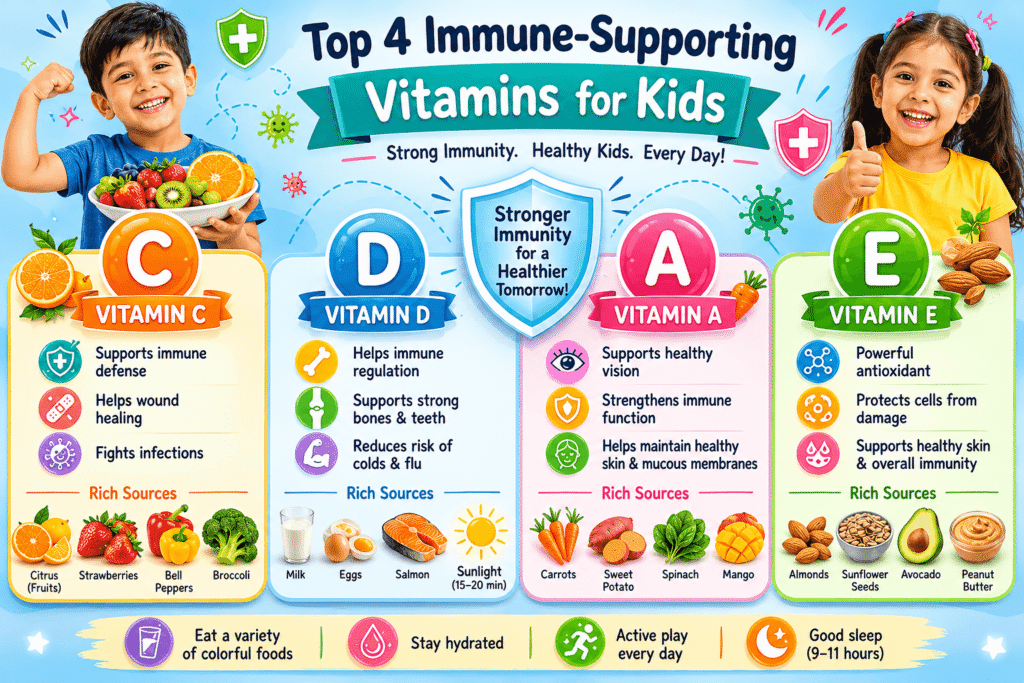
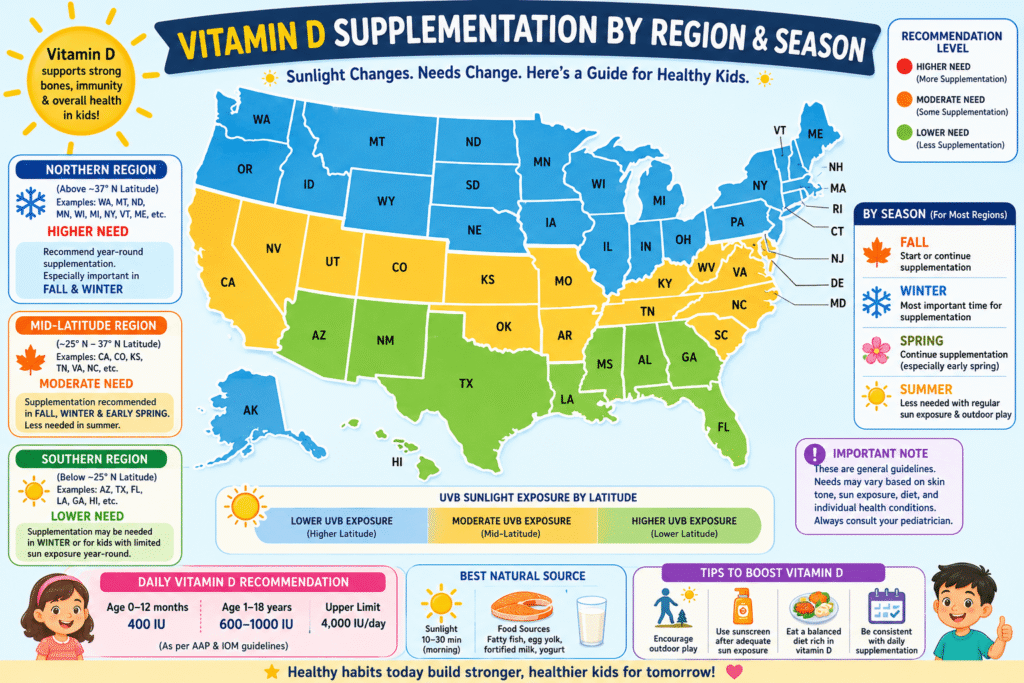
Vitamin D acts like a immune system conductor. It activates white blood cells that fight infection and reduces inflammatory markers linked to respiratory infections. Studies show vitamin D deficiency significantly increases cold and flu risk in kids.
Vitamin C works as an antioxidant, protecting immune cells from damage and supporting antibody production. It doesn’t prevent colds entirely (sorry, Grandma), but adequate C supports proper immune function.
Zinc is essential for white blood cell development and function. Deficiency dramatically impairs immune response and it’s surprisingly common in picky eaters.
Probiotics maintain healthy gut bacteria, which produce compounds that strengthen the intestinal barrier and communicate with immune cells. The gut is where 70% of your immune system lives.
The bottom line: These vitamins create the conditions for a strong immune system, but they work best within the context of good nutrition, sleep, and physical activity.
Best Types of Vitamins for Kids’ Immune Support
1. Vitamin D: The #1 Immunity Vitamin for Kids
Why it matters: Vitamin D deficiency is incredibly common in children particularly those in northern climates, with darker skin tones, or limited sun exposure.
Low vitamin D = higher cold and flu rates. Higher vitamin D = fewer respiratory infections.
The evidence:
- A 2019 study in JAMA Pediatrics found supplementing vitamin D reduced respiratory infection risk by up to 20% in school-aged children.
- The AAP recommends 400-600 IU daily for kids (1000 IU in some cases).
How to get it:
- Sun exposure (best, but risky in summer): 10-30 minutes of midday sun 3-4x weekly
- Food sources: Fatty fish (salmon, mackerel), egg yolks, fortified milk
- Supplements (when needed): Vitamin D3 gummies or drops
Red flag: Vitamin D toxicity is rare but possible. Stick to 600-1000 IU daily for kids under 8 years old.
2. Vitamin C: The Classic Immunity Supporter
The myth vs. reality:
- Myth: Vitamin C prevents colds.
- Reality: Adequate vitamin C supports proper immune function. It doesn’t prevent infection but may reduce symptom duration.
The evidence:
- Research shows vitamin C supplementation may reduce cold duration by 8% (roughly 1 day shorter).
- Only effective if taken before you get sick (not after).
- More effective in children exposed to extreme physical stress (heavy athletes).
How much do kids need?
- Ages 1-3: 15 mg/day
- Ages 4-8: 25 mg/day
- Ages 9-13: 45 mg/day
- Ages 14-18: 75-90 mg/day
Most kids eating any fruit or vegetables get enough C. Supplementation is mainly helpful for extremely picky eaters.
Best sources:
- Food (citrus, berries, peppers)
- Vitamin C gummies (if needed)
3. Probiotics: The Gut-Immunity Connection
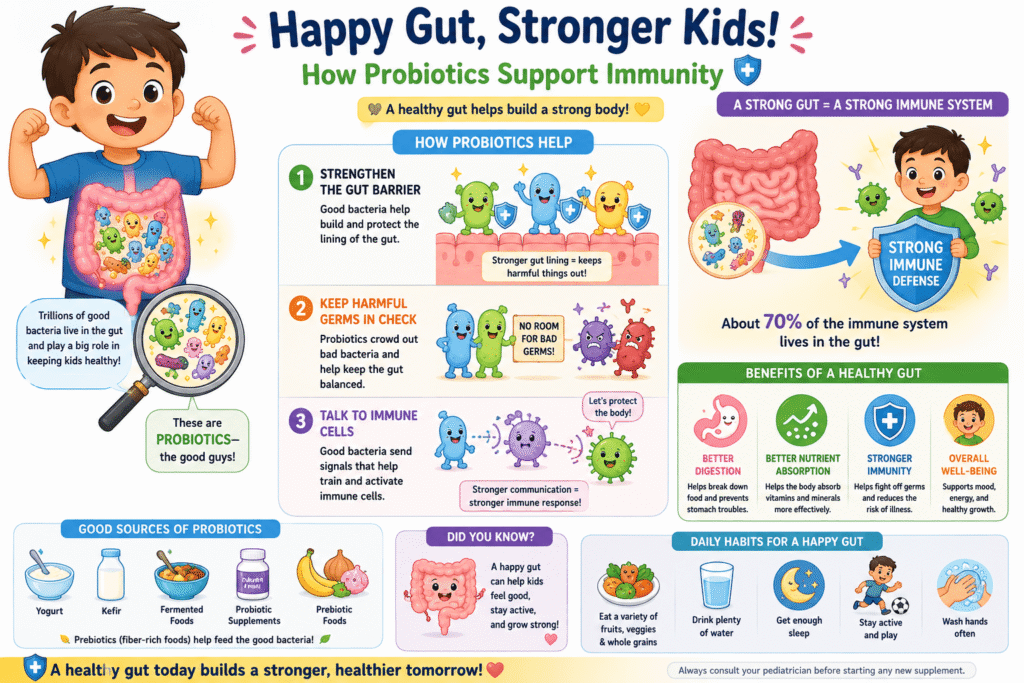
Why probiotics matter: The gut houses 70% of your immune system. Healthy gut bacteria produce compounds that:
- Strengthen the intestinal barrier
- Communicate with immune cells
- Reduce inflammatory markers
- Support antibody production
The evidence:
- Meta-analyses show certain probiotic strains reduce respiratory infection incidence by 10-15% in children.
- Most effective for kids with frequent infections or post-antibiotic use.
- Not all probiotics are equal—specific strains matter.
Best strains for kids’ immunity:
- Lactobacillus rhamnosus GG: Most-studied for respiratory infections
- Bifidobacterium longum: Supports balanced immunity
- Saccharomyces boulardii: Good for gut health post-antibiotics
Important caveat: Probiotics are NOT recommended for immunocompromised kids without medical approval (risk of infection).
4. Zinc: The Forgotten Immunity Mineral
Why zinc matters: Zinc is essential for white blood cell development. Even mild deficiency impairs immune response.
The problem: Zinc deficiency is common in picky eaters (especially vegetarians), and it’s not always obvious.
The evidence:
- Children with adequate zinc have 25% fewer respiratory infections.
- Supplementation reduces duration of colds if started within 24 hours of symptoms.
- Daily supplementation shows benefits mainly in deficient kids.
Safe dosage for kids:
- Ages 1-3: 3-5 mg/day
- Ages 4-8: 5-8 mg/day
- Ages 9-13: 8 mg/day
- Ages 14-18: 11 mg/day
5. Multivitamins: The “Insurance Policy” Approach
When they help: Multivitamins work best for children with limited diets, restrictive eating patterns, or diagnosed deficiencies.
When they’re unnecessary: If your child eats a reasonably varied diet, they likely get sufficient nutrients from food.
What to look for in kids’ multivitamins:
- ✓ Third-party tested (NSF, USP certification)
- ✓ No added sugar or artificial sweeteners
- ✓ Age-appropriate dosing
- ✓ Bioavailable forms (D3, not D2; folate, not folic acid)
- ✓ Free from allergens (especially if child has sensitivities)
Top Recommended Kids’ Immunity Vitamin Brands
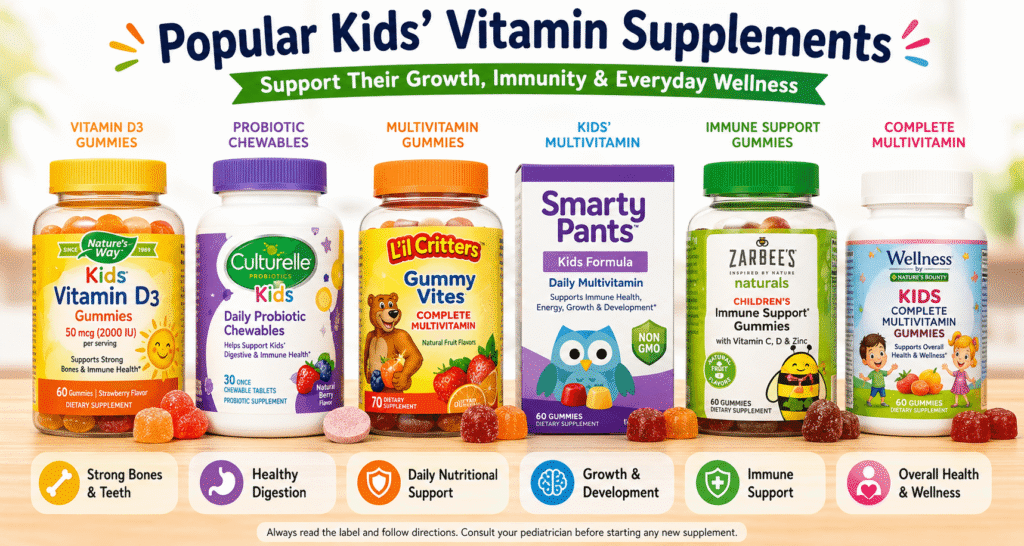
The Comparison Table
| Brand | Type | Key Benefit | Format | Price | Best For |
|---|---|---|---|---|---|
| Brand A | Vitamin D3 | Immune + Bone Health | Gummies | $8-12/mo | Most kids |
| Brand B | Liquid D3 | Fast absorption, toddler-friendly | Drops | $10-15/mo | Babies & toddlers |
| Brand C | Vitamin C | Antioxidant support | Gummies | $6-10/mo | Picky eaters |
| Brand E | Probiotics | Gut-immune connection | Gummies | $12-18/mo | Frequent infections |
| Brand J | Multivitamin | Complete coverage | Gummies | $10-15/mo | Limited diet |
| Brand F | Probiotic Powder | Customizable dosing | Powder | $15-20/mo | Sensitive kids |
Common Mistakes Parents Make
Mistake #1: “More is Better”
The problem: Parents overdose kids on vitamins thinking higher doses = faster results.
The reality: Excess vitamin A, D, and iron are toxic. Vitamin D toxicity causes calcium buildup, leading to kidney stones and hypercalcemia. Iron overdose damages the liver.
The fix: Follow age-appropriate dosing. When in doubt, consult your pediatrician.
Mistake #2: Giving Vitamins Instead of Eating Well
The problem: Using supplements as a substitute for healthy eating.
The reality: No supplement replaces food nutrition. Whole foods contain thousands of micronutrients supplements can’t replicate.
The fix: Supplements support nutrition, not replace it. Focus on food first.
Mistake #3: Ignoring Quality & Third-Party Testing
The problem: Buying the cheapest supplement without checking certification.
The reality: The supplement industry is loosely regulated. Some products contain different ingredients than listed, higher heavy metal content, or contamination.
The fix: Buy NSF or USP-certified products. Yes, they cost slightly more, but you know what you’re getting.
Mistake #4: Giving the Same Supplement Year-Round
The problem: Kids don’t need the same vitamin support in summer (sun exposure) as winter.
The reality: Vitamin D needs change seasonally. Immune support needs vary by season.
The fix: Adjust supplementation seasonally. More D in winter, less in summer (if sunny climate).
Mistake #5: Not Talking to Your Pediatrician
The problem: Starting supplements without discussing with the doctor.
The reality: Some supplements interact with medications. Some kids have absorption issues requiring higher doses. Individual needs vary.
The fix: Always mention supplements to your pediatrician, especially if your child takes medications.
Safety Concerns: What Pediatricians Want Parents to Know
Regulation Gaps
The FDA doesn’t regulate supplements the same way as medications. This means:
- No pre-market safety testing required
- Manufacturer makes safety claims (not independently verified)
- Contamination and quality issues can slip through
Protection: Buy NSF, USP, or ConsumerLab-certified products.
Allergies & Sensitivities
Common supplement allergens:
- Gelatin (in gummies) — use pectin-based alternatives if vegetarian/vegan
- Egg (in some vitamin D) — check labels
- Tree nuts — frequent cross-contamination risk
- Artificial dyes — linked to hyperactivity in sensitive kids
Action: Always read the full ingredient list, not just the label front.
Interactions with Medications
Some vitamins interfere with common kids’ medications:
- Iron supplements reduce antibiotic absorption
- Vitamin K interferes with blood thinners
- Calcium reduces tetracycline absorption
Action: Tell your pediatrician every supplement your child takes.
Vitamin Toxicity Thresholds
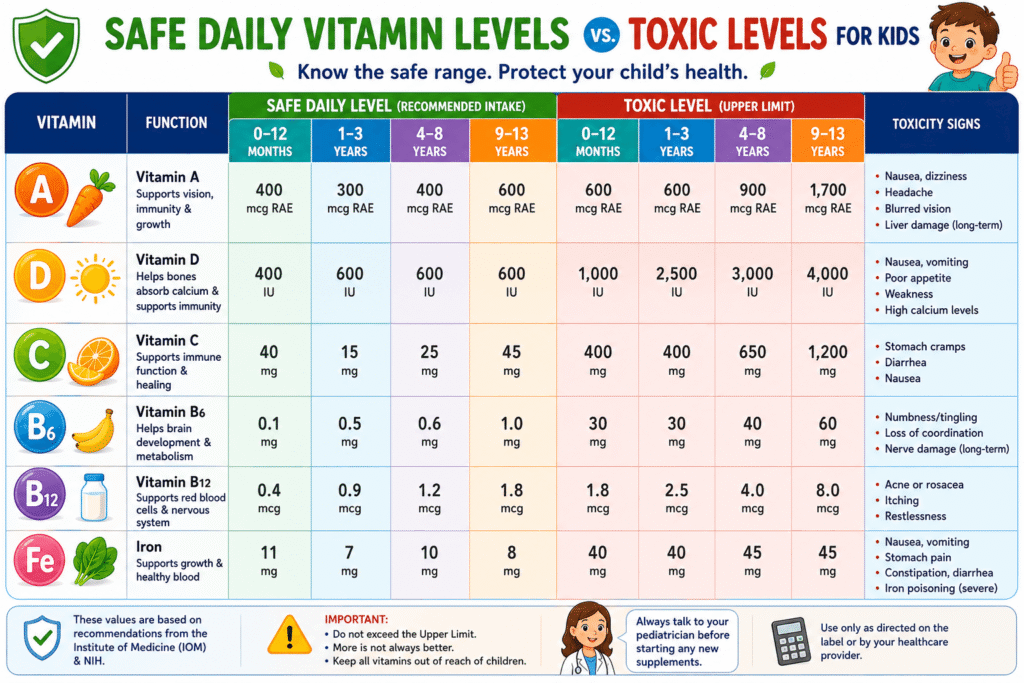
| Vitamin | Safe Range | Toxic Level | Symptoms of Toxicity |
|---|---|---|---|
| A | 400-600 IU | >10,000 IU daily | Hair loss, bone pain, liver damage |
| D | 400-1000 IU | >2000 IU daily | Nausea, weakness, kidney problems |
| C | 45-90 mg | >1000 mg daily | Diarrhea, kidney stones (rare in kids) |
| Zinc | 3-11 mg | >40 mg daily | Nausea, copper deficiency |
| Iron | 7-10 mg | >20 mg daily | Organ damage, death (accidental overdose) |
How to Choose the Right Vitamin Format for Your Kid
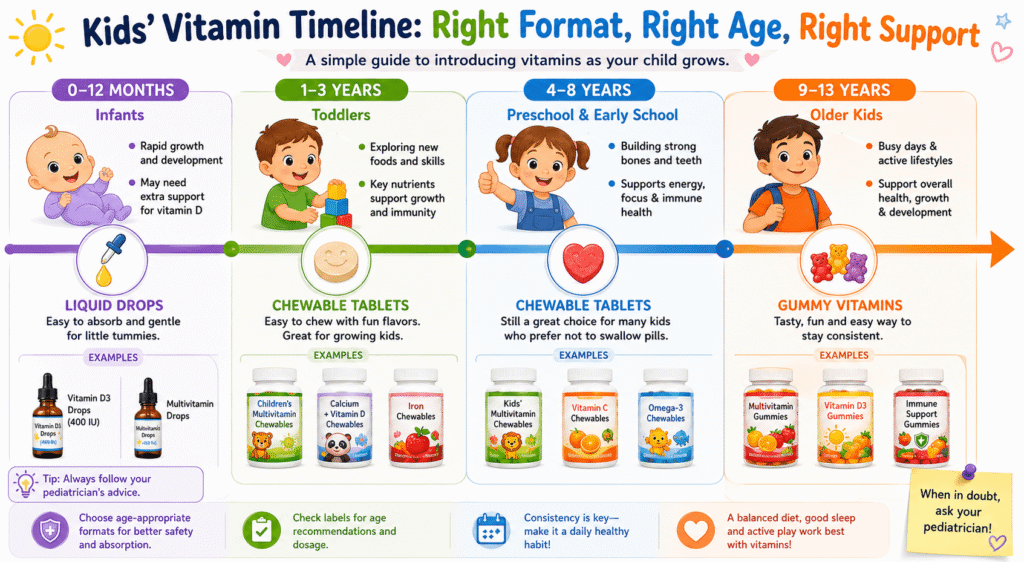
Gummies
Pros:
- Tastes good (kids actually take them)
- Easy to swallow
- Appealing to kids
Cons:
- Higher sugar content (even sugar-free versions)
- Takes longer to absorb
- Can stick to teeth
Best for: Kids who won’t take pills, no cavity risk
Top pick: [AFFILIATE LINK: Brand A Vitamin D3 Gummies]
Liquids/Drops
Pros:
- Fastest absorption
- No choking risk
- Easy for toddlers
- Customizable dosing
Cons:
- Takes longer to dispense
- Some have strong tastes
- More difficult to portion accurately
Best for: Babies, toddlers, fast absorption needs
Top pick: [AFFILIATE LINK: Brand B Vitamin D Drops]
Tablets/Chewables
Pros:
- No sugar
- Easier to portion
- Most cost-effective
- Longer shelf life
Cons:
- Kids might not take them
- Choking risk in young kids
- Some have chalky taste
Best for: Older kids, budget-conscious parents, no sugar concerns
Top pick: [AFFILIATE LINK: Brand L Multivitamin Tablets]
Powders
Pros:
- Mix into food
- No sugar needed
- Customizable dosing
- Good for sensitive kids
Cons:
- Takes effort to mix
- Can change food taste
- Harder to ensure consistent dosing
Best for: Picky eaters, probiotics, specialized formulas
Top pick: [AFFILIATE LINK: Brand F Probiotic Powder]
FAQ Section
Q: At what age can kids start taking vitamins?
A: Most vitamins can start at age 1+, but timing varies:
- Vitamin D drops: From birth (AAP recommends starting immediately)
- Gummies: Age 3+ (choking risk below this)
- Chewables: Age 6+ (depends on child’s ability to chew safely)
Always consult your pediatrician for individual recommendations.
Q: How long does it take to see results from kids’ vitamins?
A: This varies by vitamin and health status:
- Vitamin D: 4-6 weeks to see immune function improvements
- Probiotics: 2-3 weeks for gut health benefits
- Multivitamins: 6-8 weeks to address deficiency symptoms
- Vitamin C: Effects on immune function are immediate, but prevention benefits take consistent use
Note: If your child has a diagnosed deficiency, improvements may take 2-3 months.
Q: Can kids take vitamins with food?
A: Generally yes, but timing matters:
- Fat-soluble vitamins (A, D, E, K): Take WITH fatty meals for better absorption
- Iron: Take on empty stomach for best absorption (with vitamin C enhances this)
- Zinc: Can take with or without food
- Probiotics: Usually with food, but check the brand
Q: Are gummy vitamins as effective as pills?
A: Effectiveness depends on:
- Absorption rate: Gummies absorb slightly slower but still effectively if formulated well
- Ingredient quality: High-quality gummies work as well as pills
- Consistency: Gummies work better if kids actually take them consistently
The “best” vitamin is the one your child will actually take.
Q: What’s the difference between vitamin D2 and D3 for kids?
A:
- D2 (ergocalciferol): Plant-based, less bioavailable, cheaper
- D3 (cholecalciferol): Animal-based or algae, more bioavailable, slightly more expensive
For kids, D3 is preferable (more effective at lower doses).
Q: Can vitamins replace a healthy diet?
A: Absolutely not. Supplements fill gaps, not replace meals:
- Whole foods contain fiber, phytonutrients, and thousands of compounds supplements don’t have
- Food provides better nutrient balance and synergies
- Supplements support nutrition in specific situations (deficiencies, restrictive diets, etc.)
Think of supplements as a safety net, not the foundation.
Q: Should I give my child vitamins year-round?
A: It depends on the vitamin and your climate:
- Vitamin D: More important fall/winter in northern climates; less in summer
- Probiotics: Year-round benefits if addressing specific issues
- General multivitamins: Depends on diet consistency
Adjust seasonally based on sun exposure and dietary intake.
Q: Are natural vitamins better than synthetic?
A: Quality matters more than natural vs. synthetic:
- Some synthetic vitamins (like D3 from algae) are superior to natural sources
- “Natural” doesn’t always mean better or safer
- Focus on third-party testing and bioavailability, not marketing claims
Pros & Cons Summary Table
| Factor | Pros | Cons |
|---|---|---|
| Vitamin D Supplements | Prevents deficiency, supports immunity, bone health | Can cause toxicity if overdosed |
| Vitamin C Supplements | Antioxidant support, may reduce cold duration | Excessive intake causes GI issues |
| Probiotic Supplements | Gut-immune connection, may reduce infections | Risk for immunocompromised kids |
| Multivitamins | Covers nutritional gaps | Unnecessary for balanced diet eaters |
| Mineral Supplements (Zinc, Iron) | Corrects deficiency, supports immunity | Toxicity risk if overdosed |
Final Recommendations: The Immunity-Boosting Vitamin Strategy
Here’s the simple framework:
Step 1: Assess Your Child’s Diet
- Does your child eat fruits, vegetables, proteins, and whole grains regularly?
- If yes, they likely don’t need a multivitamin.
- If no, a basic multivitamin can help fill gaps.
Step 2: Identify Season-Specific Needs
- Fall/Winter: Add Vitamin D (most kids are deficient)
- Year-round: Probiotics if frequent infections
- As needed: Vitamin C and zinc during cold/flu season
Step 3: Choose Quality Supplements
- Buy NSF/USP-certified products
- Check third-party testing websites (ConsumerLab, NSF)
- Avoid artificial dyes, excess sugar, common allergens
Step 4: Talk to Your Pediatrician
- Share your supplement plan
- Ask about any interactions with medications
- Get personalized dosing recommendations
Step 5: Set Realistic Expectations
- Supplements support immunity, not replace healthy habits
- The real immunity foundation: balanced diet, 9-11 hours sleep, regular movement, vaccines
Best Kids’ Immune Vitamins Quick-Pick Guide
For most kids: [Brand A Vitamin D3 Gummies] + healthy eating
For picky eaters: [ Brand J Complete Kids Multivitamin Gummies]
For frequent infections: [ Brand E Kids Probiotic Gummies]
For winter immunity boost: [ Brand A Vitamin D3] + [AFFILIATE LINK: Brand C Vitamin C Gummies]
Best budget option: [Brand L Kids Multivitamin Tablets]
Best for babies/toddlers: [ Brand B Vitamin D Drops]
The Bottom Line
The best vitamin for your child’s immune system is… the one they’ll actually take, supports their specific needs, and is third-party tested.
But here’s the deeper truth: vitamins aren’t magic. The real immunity boosters are:
- A diet rich in whole foods
- 9-11 hours of quality sleep
- Daily physical activity (even 30 minutes)
- Recommended vaccines (most effective immunity tool available)
- Proper hygiene (hand-washing beats any supplement)
Supplements fill gaps. They don’t replace fundamentals.
If your child eats well, sleeps enough, stays active, and is vaccinated, targeted supplementation (especially vitamin D in winter) provides a meaningful safety net. For kids with dietary restrictions, deficiencies, or frequent infections, the right supplements genuinely help.
The key is being intentional not following social media influencers pushing every supplement under the sun.