Let me be honest with you I’ve spent years in the digital health and wellness space, promoting products, reading studies, and more importantly, actually testing these techniques myself. And the one thing I’ve noticed? Most articles on mental wellness exercises for anxiety and stress relief are copy-paste garbage written by people who’ve never had a panic attack at 2 AM or frozen before a client call because their chest felt too tight.
This article is different. I’m writing this from a place of real experience both personal and professional. Whether you’re someone dealing with low-grade daily stress or full-blown anxiety spirals, these exercises are going to give you something you can use today.
Let’s get into it.
What Are Mental Wellness Exercises?
Mental Wellness Exercises for Anxiety and Stress Relief , regulate your nervous system, and train your mind to respond not react to triggers.
They’re not bubble baths and scented candles . These are evidence-backed techniques used by therapists, performance coaches, and yes by people like me who can’t afford to be mentally foggy when running campaigns, writing copy, or managing multiple clients.
1. Diaphragmatic Breathing (Box Breathing)
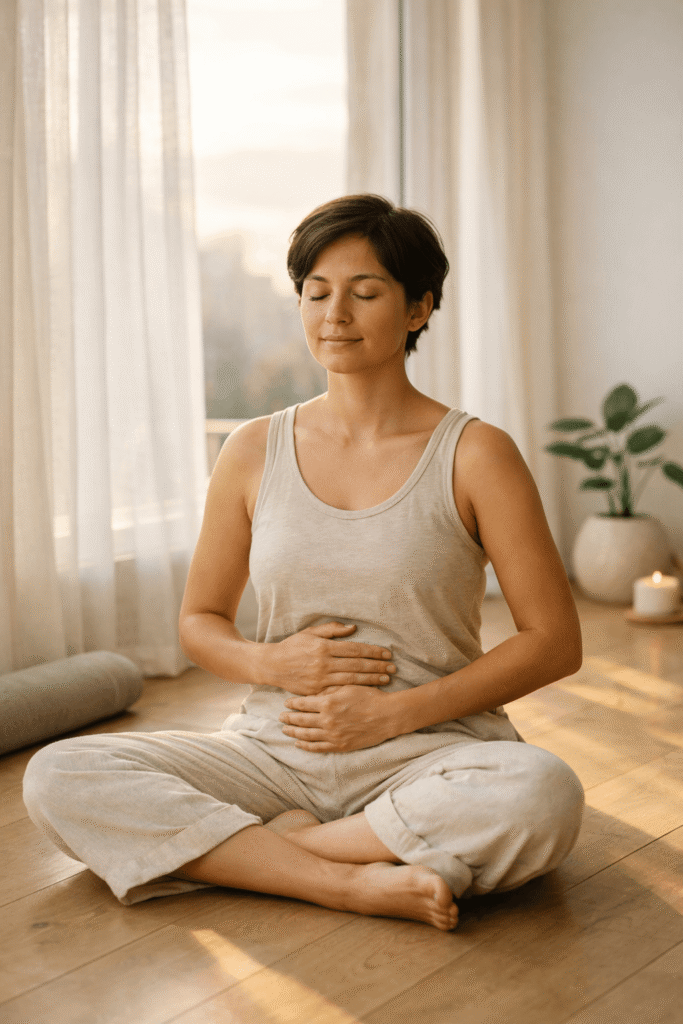
This is the single most underrated tool in the Mental Wellness Exercises for Anxiety and Stress Relief toolkit. Box breathing also called 4-4-4-4 breathing directly activates your parasympathetic nervous system. That’s the “rest and digest” mode your body desperately needs when anxiety fires up your “fight or flight” response.
How to do it:
- Inhale for 4 counts
- Hold for 4 counts
- Exhale for 4 counts
- Hold for 4 counts
- Repeat 4–6 rounds
I personally use this before any high-stakes situation pitching a new affiliate partner, recording a video, or even before reading emails on a bad day. Within 5 minutes, your heart rate slows, your thoughts clarify, and your body stops treating your inbox like a predator.
Pro tip: Pair this with a free app like Insight Timer for guided sessions when you’re too anxious to count on your own.
2. Progressive Muscle Relaxation (PMR)
PMR is one of those techniques that sounds boring until you try it and realize you’ve been carrying tension in your jaw, shoulders, and hands for years without knowing it.
The process involves tensing and then releasing specific muscle groups in sequence usually starting from your feet and working up to your face.
Why it works: Anxiety stores itself in your body. PMR forces your nervous system to learn the contrast between tension and release, training it to default to relaxation over time.
Simple 10-minute PMR routine:
- Lie down or sit comfortably
- Tense your feet muscles for 5 seconds
- Release and breathe for 10 seconds
- Move to calves → thighs → abdomen → hands → shoulders → face
- After completing all groups, lie still for 2 minutes
I recommend doing this before bed. Sleep quality improvement from PMR is real I’ve seen it recommended in countless high-performance wellness programs I’ve reviewed and promoted, and the user feedback is consistently positive.
3. Mindfulness Meditation (The Non-Fluffy Version)

Mindfulness has been co-opted by wellness brands selling $80 candles, but the core practice is completely free and clinically proven to Mental Wellness Exercises for Anxiety and Stress Relief.
Here’s what it actually means: paying attention to the present moment without judgment.
That’s it.
Beginner’s 5-minute mindfulness practice:
- Set a 5-minute timer
- Sit comfortably and close your eyes
- Focus on your breath the sensation of air entering your nose, filling your lungs, leaving your mouth
- When your mind wanders (it will), gently return focus to your breath without criticism
- Repeat daily
After 8 weeks of consistent practice (yes, 8 weeks this isn’t a quick fix), research shows measurable reductions in anxiety and cortisol levels. The key word is consistent. Ten minutes daily beats 60 minutes once a week, every single time.
4. Journaling for Anxiety Release
Journaling is one of the most powerful and most avoided mental wellness exercises for anxiety and stress relief. Why avoided? Because people think they need to “write well.” They don’t.
Your journal isn’t a blog post. It’s not going to be read by anyone. It’s a brain dump.
Three journaling methods that actually work:
a) The Brain Dump Method Write everything in your head worries, to-do lists, fears, random thoughts for 10 minutes straight without stopping. No punctuation necessary. This literally empties your mental RAM.
b) Gratitude Journaling Write 3 specific things you’re grateful for each morning. Not generic things like “my family.” Specific ones: “My coffee was perfect this morning and I had 20 uninterrupted minutes to enjoy it.” Specificity is what makes this work neurologically.
c) The Worry Dump + Reframe Write down your top anxiety trigger of the day. Then write: “What’s the worst that can realistically happen? What’s the most likely outcome? What can I control right now?” This is cognitive behavioral therapy you’re doing on yourself for free.
5. Physical Movement as a Mental Wellness Tool
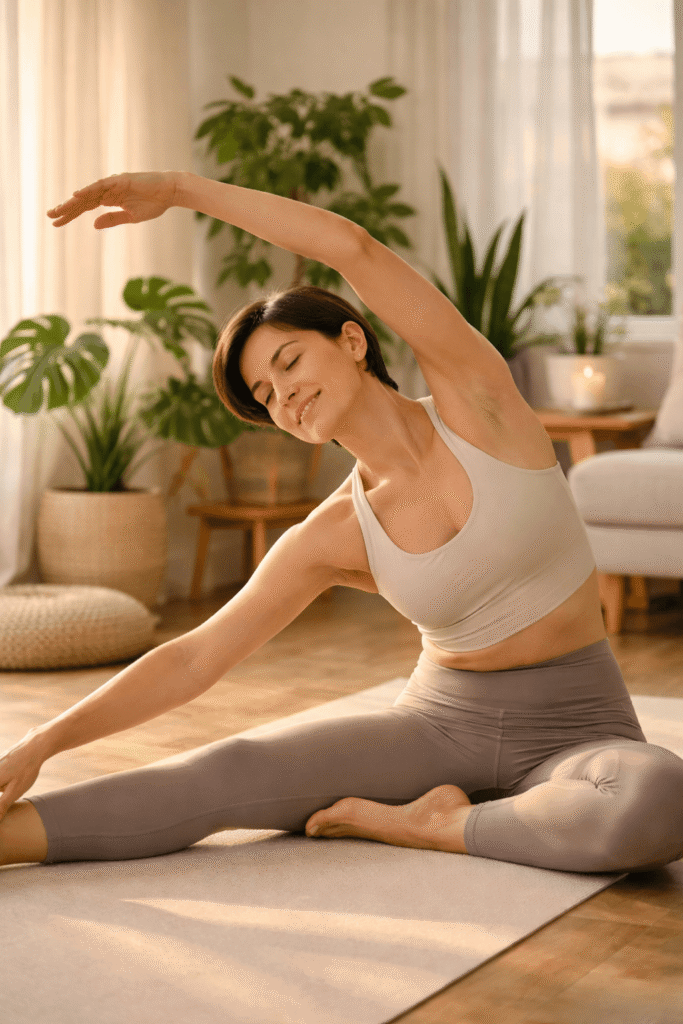
I’ve promoted fitness products for years, and here’s what I know: you don’t need a gym membership to use movement as a Mental Wellness Exercises for Anxiety and Stress Relief. What you need is consistency and intention.
Even a 20-minute walk especially outdoors has been shown to reduce cortisol, boost serotonin, and interrupt the anxiety thought loop. The key is walking without your phone (or at least without headphones blasting a podcast). Give your mind space to breathe.
Other movement-based mental wellness exercises:
- Yoga (even 15 minutes): Combines breathwork, body awareness, and movement a triple threat for anxiety
- Dancing alone in your room: Sounds ridiculous, sounds effective. It is both.
- Cold water face immersion: Splash cold water on your face for 30 seconds. This activates the dive reflex and rapidly slows heart rate. I use this during anxiety spikes it works within 60 seconds.
6. The 5-4-3-2-1 Grounding Technique
This is a sensory grounding exercise specifically designed for acute anxiety moments — when your brain is spinning out and you need to anchor it back to reality fast.
How it works:
Look around and identify:
- 5 things you can SEE
- 4 things you can TOUCH (and actually touch them)
- 3 things you can HEAR
- 2 things you can SMELL
- 1 thing you can TASTE
This forces your brain out of the anxious “future-thinking” loop and into the present sensory moment. I’ve recommended this technique to every person in my network who deals with anxiety, and it’s consistently the one they come back to say helped them most in the moment.
7. Digital Detox Windows

Here’s an uncomfortable truth: if you’re consuming 6+ hours of digital content daily and wondering why your anxiety is high the screen time is part of the problem.
Cortisol spikes every time you check notifications. Social media is algorithmically designed to trigger emotional responses including anxiety. News cycles are endless and catastrophic by design.
Practical digital detox windows:
- No phone for the first 30 minutes after waking
- No screens 1 hour before bed
- One full “screen-free Sunday” per month
- Turn off all non-essential push notifications permanently (this alone changed my stress levels significantly)
This isn’t about demonizing technology. It’s about using it intentionally rather than being used by it.
8. Social Connection and Boundaries
Anxiety thrives in isolation. One of the most powerful yet most overlooked mental wellness exercises is intentional human connection.
Call someone you actually enjoy talking to. Not to vent endlessly (which can sometimes amplify anxiety), but to laugh, reminisce, or just feel connected.
At the same time: set boundaries with energy-draining relationships. You cannot pour from an empty cup, and you cannot maintain mental wellness while constantly absorbing other people’s chaos.
Building Your Personal Mental Wellness Routine
Here’s the thing about mental wellness exercises for anxiety and stress relief they work best when they’re stacked into a daily rhythm, not used sporadically when you’re already in crisis mode.
Sample daily routine:
| Time | Practice | Duration |
|---|---|---|
| Morning | Gratitude journaling + box breathing | 10 min |
| Midday | 20-min walk (no phone) | 20 min |
| Afternoon | 5-4-3-2-1 grounding (if needed) | 5 min |
| Evening | PMR or yoga | 15 min |
| Before Bed | Brain dump journaling + digital detox | 10 min |
Start with just one or two. Build from there. Consistency over intensity — always.
FAQ: Mental Wellness Exercises for Anxiety and Stress Relief
Q1: How quickly do mental wellness exercises show results?
Some techniques like box breathing and the 5-4-3-2-1 grounding method show results within minutes. Others like mindfulness meditation and journaling typically show noticeable improvements in 4–8 weeks of consistent practice. Don’t expect overnight transformation expect gradual, compounding improvement.
Q2: Can mental wellness exercises replace therapy or medication?
No — and anyone who tells you otherwise is misleading you. These exercises are powerful complements to professional mental health treatment, not replacements. If you’re dealing with clinical anxiety or depression, please work with a licensed therapist or psychiatrist alongside these practices.
Q3: Which mental wellness exercise is best for acute anxiety attacks?
Box breathing and the 5-4-3-2-1 grounding technique are the two most effective for immediate anxiety relief. Both can be done anywhere, anytime, without any equipment.
Q4: How long should I practice these exercises daily?
Even 10–15 minutes daily is enough to start seeing benefits. The key is daily practice, not marathon sessions. A 10-minute morning routine done every day for 60 days will outperform a 2-hour weekend session every time.
Q5: Are there any apps that can help with mental wellness exercises?
Yes — some genuinely good ones include Insight Timer (free, excellent for meditation and breathwork), Headspace, Calm, and Woebot (an AI-based cognitive behavioral therapy tool). I’ve personally reviewed and used all of these.
Q6: What if I feel worse when I try to meditate?
This is more common than people admit. When you sit in silence for the first time, suppressed thoughts can surface and feel overwhelming. This is normal and temporary. Start with just 2–3 minutes and increase gradually. If discomfort persists, movement-based practices like walking or yoga may be a better starting point for you.
Final Thoughts
Mental wellness exercises for anxiety and stress relief aren’t a one-size-fits-all solution they’re a toolkit. Your job is to find the combination that works for your nervous system, your schedule, and your life.
From my years of experience in the wellness space testing products, reading the research, and watching what actually transforms people’s lives I can tell you with confidence: the people who manage anxiety best aren’t the ones who found one magic technique. They’re the ones who built small, consistent habits and protected their mental space with the same seriousness they give to their physical health.
Start small. Stay consistent. And remember progress in mental wellness is rarely linear, but it is always possible.