Introduction: Why Your Plate Is Your Most Powerful Medicine
Let me be straight with you when I was first diving deep into the world of diabetes nutrition content, I expected to find a simple list of “foods to eat and avoid.” What I found instead was a surprisingly nuanced, deeply personal topic that millions of people are navigating every single day, often without the right guidance.
If you or someone you love is managing Type 1, Type 2, or prediabetes, you already know that nutrition for diabetes meal planning in 2026 isn’t just about cutting sugar. It’s about understanding how every meal affects your blood glucose, energy, mood, and long-term health.
In this guide, I’m going to walk you through everything you need to know in 2026 the latest thinking, practical strategies, smarter food swaps, and yes, a few tools and products that have genuinely helped people I’ve researched and connected with. By the end, you’ll have a clear, actionable framework you can start using at your very next meal.
What Does “Nutrition for Diabetes” Actually Mean in 2026?
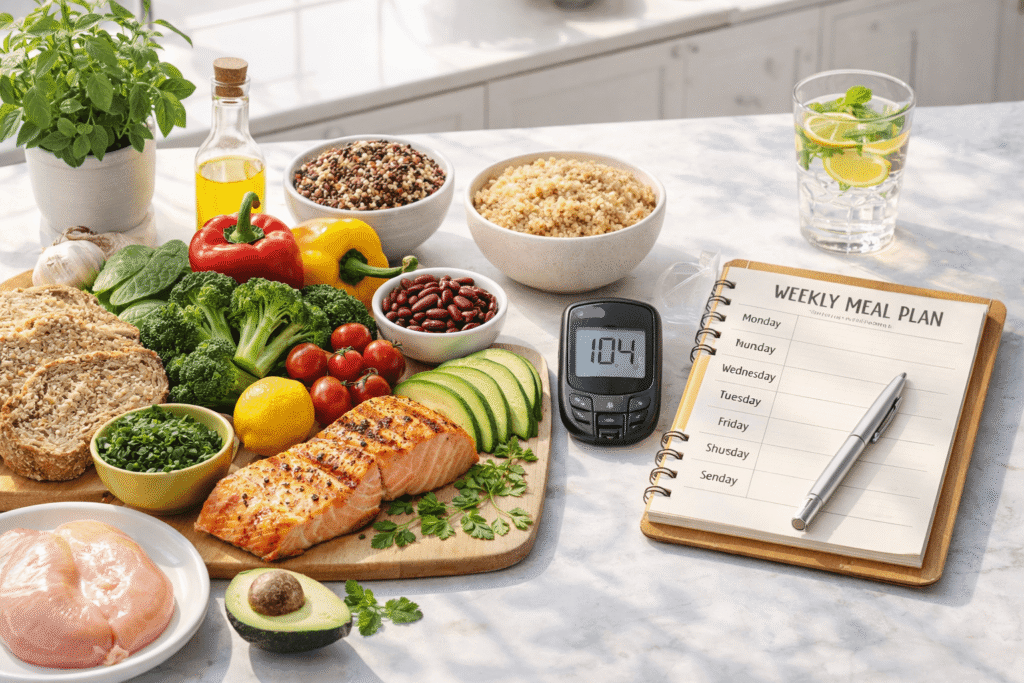
The conversation around diabetic nutrition has evolved significantly. Gone are the days of blanket “no carbs ever” advice. Modern dietitians and endocrinologists now emphasize something far more personalized: glycemic response, which varies from person to person based on gut microbiome, stress, sleep, and activity levels.
In 2026, the core pillars of diabetes nutrition remain consistent, but the application has become smarter:
- Carbohydrate quality over quantity : not all carbs spike blood sugar equally
- Protein timing : eating protein before carbs can blunt glucose spikes
- Fat as a stabilizer :healthy fats slow digestion and reduce sugar absorption
- Fiber as your best friend : soluble fiber is a game-changer for blood glucose management
- Meal timing and frequency : when you eat matters almost as much as what you eat
The Foundation Understanding the Glycemic Index vs. Glycemic Load
One of the most misunderstood concepts in diabetic meal planning is the difference between the Glycemic Index (GI) and Glycemic Load (GL).
Glycemic Index (GI)
This ranks foods on a scale of 0–100 based on how quickly they raise blood sugar compared to pure glucose. A food with a GI over 70 is considered high; under 55 is low.
Glycemic Load (GL)
GL accounts for portion size, making it a more practical tool. A watermelon has a high GI but a low GL meaning a normal serving won’t devastate your blood sugar.
Practical takeaway: Don’t just fear high-GI foods. Look at your actual serving size. A small portion of white rice isn’t the enemy. A mountain of it is.
Building Your Diabetes Meal Plan A Practical Framework
Here’s how I’d approach structuring weekly nutrition for diabetes meal planning, based on research and patterns that have consistently worked:
The Plate Method Simple, Visual, Effective
The Diabetes Plate Method, endorsed by the American Diabetes Association, is probably the most beginner-friendly framework:
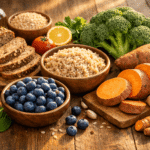
- ½ your plate: Non-starchy vegetables (broccoli, spinach, peppers, zucchini)
- ¼ your plate: Lean protein (chicken, fish, tofu, eggs, legumes)
- ¼ your plate: Quality carbohydrates (brown rice, sweet potato, quinoa, whole grain bread)
It sounds simple because it is and that’s the genius of it.
Carbohydrate Targets to Aim For
Most people with Type 2 diabetes do well with 45–60 grams of carbohydrates per meal, though this varies. Work with your dietitian, but a general framework:
| Meal | Carb Target |
|---|---|
| Breakfast | 30–45g |
| Lunch | 45–60g |
| Dinner | 45–60g |
| Snacks | 15–20g each |
The Best Foods for Blood Sugar Control
Load up on these:
- Leafy greens (spinach, kale, arugula)
- Cruciferous vegetables (broccoli, cauliflower, Brussels sprouts)
- Berries (blueberries, strawberries lower sugar, high antioxidants)
- Legumes (lentils, chickpeas, black beans fiber + protein combo)
- Fatty fish (salmon, sardines omega-3s support insulin sensitivity)
- Nuts and seeds (almonds, chia seeds, flaxseed)
- Avocado (monounsaturated fat + fiber)
- Eggs (protein-rich, negligible carbs)
- Greek yogurt (unsweetened protein + probiotics)
- Apple cider vinegar (small amounts before meals may reduce post-meal glucose spikes)
Limit or approach carefully:
- White bread, white rice, regular pasta
- Fruit juices (even 100% juice spikes blood sugar fast)
- Flavored yogurts (often loaded with added sugar)
- Processed snacks and crackers
- Sweetened beverages including sports drinks
Meal Timing The Underrated Strategy in Diabetes Nutrition
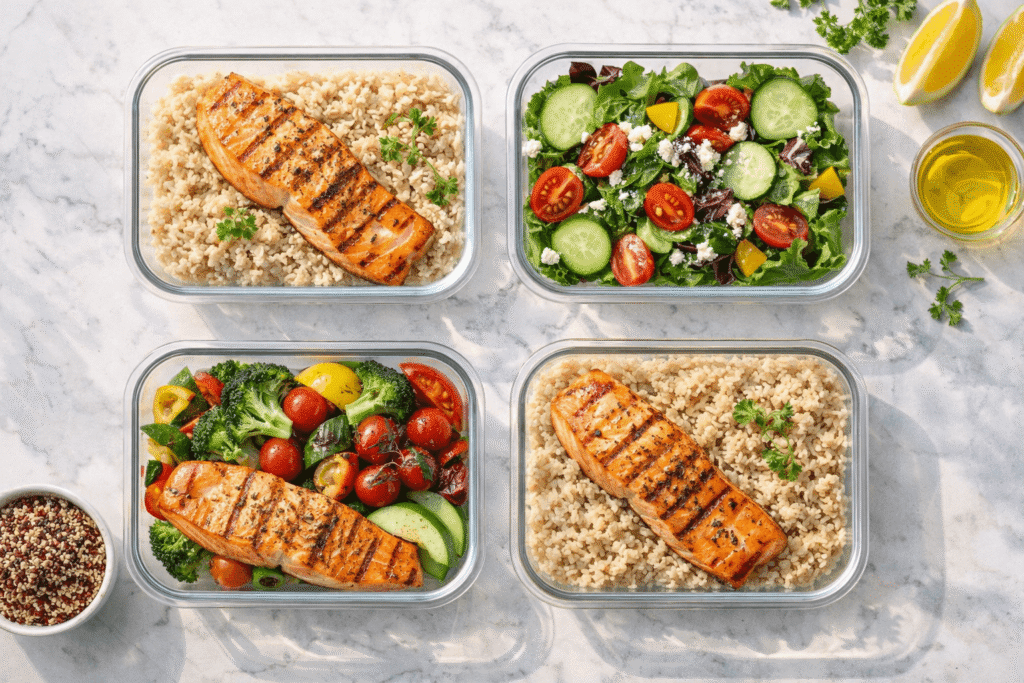
You can eat all the right foods and still struggle with blood sugar if your timing is off. Here’s what the research increasingly supports:
Don’t Skip Breakfast
Skipping breakfast is linked to higher post-lunch and post-dinner blood sugar spikes. Even a small, protein-forward breakfast helps regulate glucose throughout the day.
Front-Load Your Calories
Eating a larger breakfast and moderate lunch, with a lighter dinner, aligns with your body’s natural insulin sensitivity which is highest in the morning and decreases as the day goes on.
Consider Time-Restricted Eating Carefully
Intermittent fasting has been studied in Type 2 diabetes with mixed but generally positive results for weight management. However, if you’re on insulin or certain medications, fasting windows can cause dangerous hypoglycemia. Always consult your doctor before experimenting here.
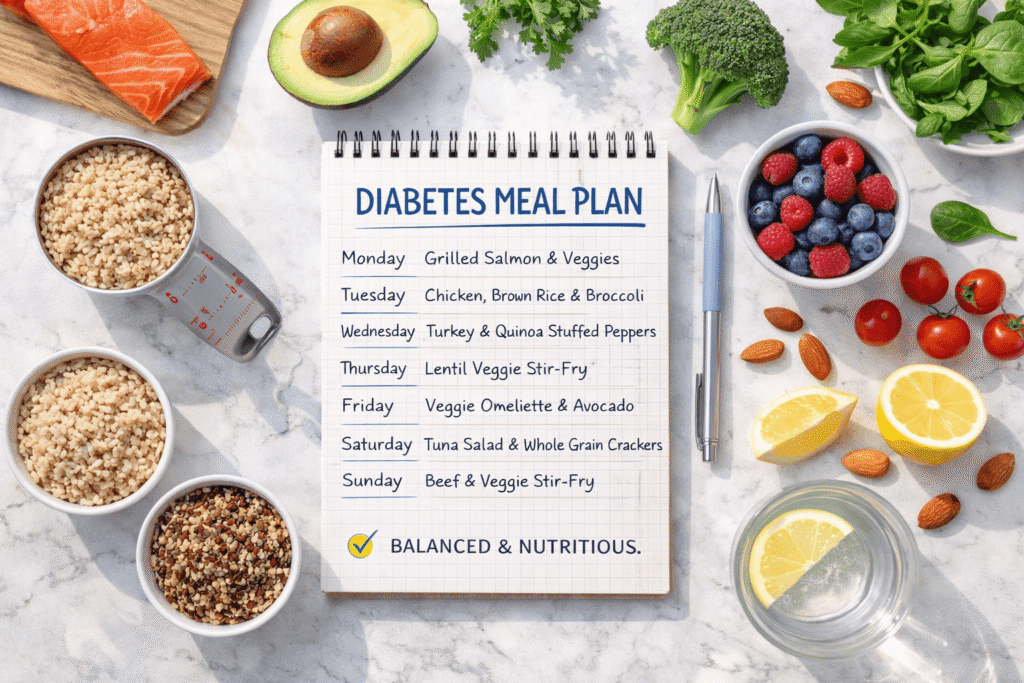
Sample 3-Day Diabetes Meal Plan (2026 Edition)
Day 1
- Breakfast: Scrambled eggs with spinach + 1 slice whole grain toast + black coffee
- Lunch: Grilled chicken salad with avocado, cucumber, olive oil/lemon dressing + small apple
- Dinner: Baked salmon + roasted broccoli + ½ cup quinoa
- Snack: 15 almonds + 1 string cheese
Day 2
- Breakfast: Unsweetened Greek yogurt + ½ cup blueberries + 1 tbsp chia seeds
- Lunch: Lentil soup + side salad with olive oil
- Dinner: Stir-fried tofu with mixed vegetables + ½ cup brown rice
- Snack: Celery sticks + 2 tbsp natural almond butter
Day 3
- Breakfast: Overnight oats (rolled oats, unsweetened almond milk, chia seeds, cinnamon, berries)
- Lunch: Turkey and avocado lettuce wraps + small handful of mixed nuts
- Dinner: Grilled shrimp tacos on corn tortillas + shredded cabbage + salsa
- Snack: Hard-boiled egg + cucumber slices
Affiliate Recommendations Tools & Products That Support Diabetes Meal Planning
I only recommend things I’ve genuinely researched or that have consistently strong reviews within the diabetes management community. Here are a few categories worth looking into:
Continuous Glucose Monitors (CGMs)
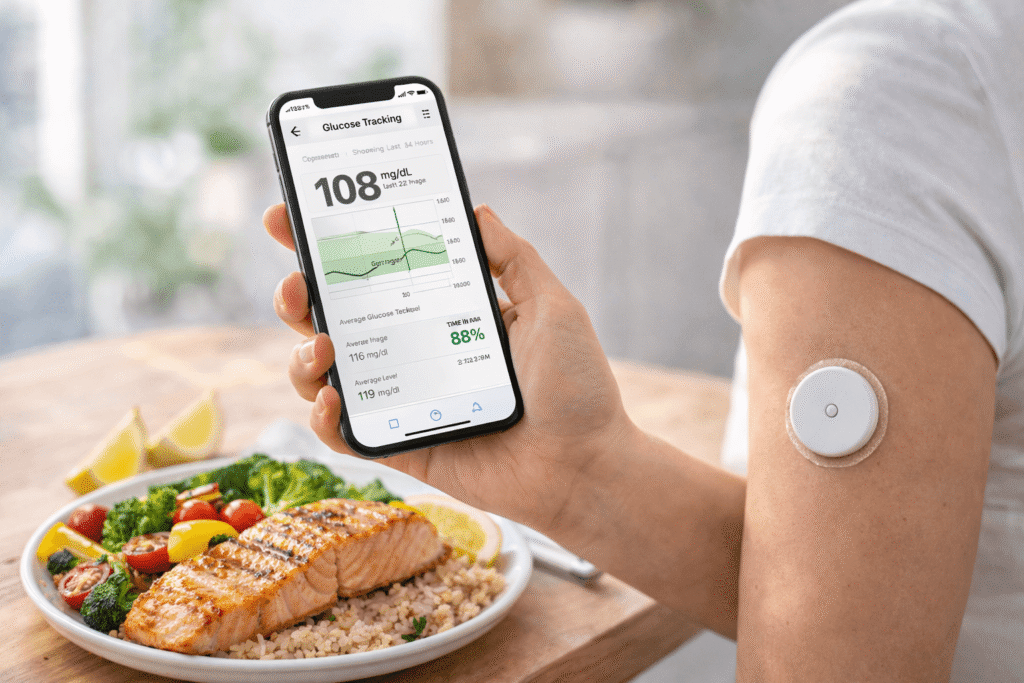
Understanding your personal blood sugar response to specific foods is transformational. CGMs like the Dexterity G7 or Abbott FreeStyle Libre 3 give real-time glucose feedback that turns nutrition theory into personal data.
Why I recommend it: Seeing your blood sugar response to a bowl of oatmeal versus eggs changes your behavior faster than any book.
Diabetes-Friendly Meal Planning Apps
Apps like Cronometer or MySugr help track macros, glucose levels, and meal patterns in one place.
High-Quality Protein Supplements
For people who struggle to hit protein targets, a clean, low-carb protein powder can help. Look for options with fewer than 5g net carbs per serving, no added sugars, and a short ingredient list.
What to look for: Whey isolate or plant-based (pea protein) with no maltodextrin or artificial sweeteners.
Portion Control Tools
A simple set of digital kitchen scales and portion plates removes the guesswork from carb counting entirely.
Pros and Cons of Common Diabetes Diets in 2026
| Diet Approach | Pros | Cons |
|---|---|---|
| Low-Carb / Keto | Strong glucose control, weight loss | Hard to sustain, may lack fiber |
| Mediterranean | Heart health, flexible, sustainable | Moderate carbs may need monitoring |
| Plant-Based | High fiber, anti-inflammatory | Protein planning required |
| DASH Diet | Blood pressure + glucose benefits | Requires portion discipline |
| Intermittent Fasting | Insulin sensitivity gains | Risky on certain medications |
Bottom line: There’s no single “best” diet. The best one is the one you can actually stick to while keeping your blood sugar in range.
7 Practical Tips for Smarter Diabetes Meal Planning
- Batch cook on Sundays : prep proteins and grains ahead so healthy meals take 10 minutes, not 40
- Read labels for hidden sugars : maltose, dextrose, corn syrup, and “evaporated cane juice” are all sugar
- Pair carbs with protein or fat : always. Never eat carbs alone.
- Eat slowly : it takes 20 minutes for satiety signals to reach your brain; slowing down reduces overeating and glucose spikes
- Stay hydrated : dehydration concentrates blood sugar. Aim for 8+ glasses of water daily
- Don’t fear fruit respect portions : ½ cup of berries is very different from a full mango
- Track your “personal glycemic response” : a CGM or even a standard glucometer used consistently reveals patterns no generic advice can predict
Conclusion: Take Back Control With Smarter Nutrition
Managing diabetes through food doesn’t have to feel like a life sentence of bland chicken and steamed vegetables. With the right framework understanding GI vs. GL, applying the plate method, timing your meals, and tracking your personal response nutrition for diabetes meal planning in 2026 becomes less about restriction and more about empowerment.
Start small. Pick one meal tomorrow and apply the plate method. Add one more tool whether that’s a food scale, a tracking app, or a CGM and watch how quickly knowledge becomes confidence.
Your blood sugar responds to every decision you make. The good news? That means every decision is an opportunity.
Frequently Asked Questions (FAQ)
Q1: What is the best diet for Type 2 diabetes meal planning in 2026? There’s no single “best” diet, but research consistently supports low-glycemic, high-fiber approaches like the Mediterranean diet or a balanced low-carb plan. The key is sustainability the best diet is one you can maintain long-term while keeping blood glucose in your target range.
Q2: How many carbs should a diabetic eat per meal? Most guidelines suggest 45–60 grams of carbohydrates per main meal for Type 2 diabetes, though individual targets vary. Work with a registered dietitian to personalize your carb targets based on your medications, activity level, and glucose goals.
Q3: What foods should diabetics avoid completely? No food needs to be completely off-limits, but diabetics should minimize sugary beverages, white refined grains, processed snacks, and foods with added sugars. Focus on reducing frequency and portion size rather than total elimination.
Q4: Can diabetics eat fruit? Yes fruit contains fiber, vitamins, and antioxidants that support health. Choose lower-sugar options like berries, apples, and pears in moderate portions. Avoid fruit juices, which spike blood sugar rapidly without the fiber benefit.
Q5: Is intermittent fasting safe for diabetics? It can be beneficial for weight management and insulin sensitivity in Type 2 diabetes, but it carries risks particularly hypoglycemia for people on insulin or certain oral medications. Always consult your doctor before starting a fasting protocol.
Q6: What is the glycemic index and why does it matter for diabetes? The glycemic index (GI) ranks foods by how quickly they raise blood glucose. Low-GI foods (under 55) cause slower, more manageable rises in blood sugar. Understanding GI helps diabetics make smarter carbohydrate choices, though portion size (glycemic load) matters just as much.
Q7: How can I meal plan for diabetes on a budget? Focus on affordable staples: eggs, canned legumes, frozen vegetables, oats, and seasonal produce. Batch cooking and buying in bulk reduces both cost and decision fatigue. A simple kitchen scale and meal prep containers are the only tools you really need to start.